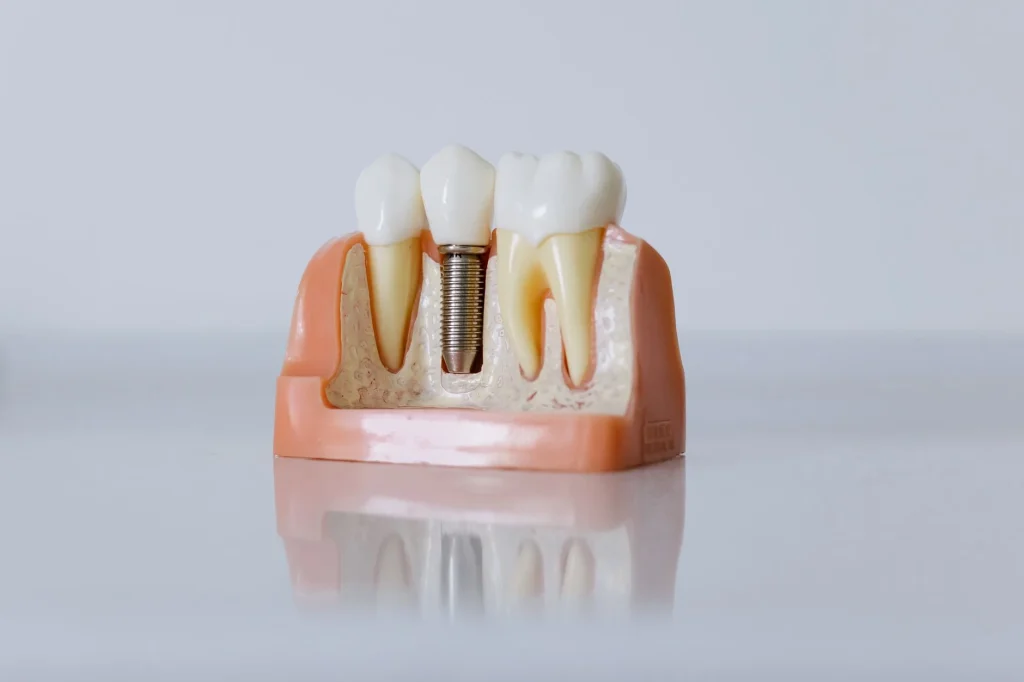
A dental implant infection starts in the soft tissue and bone that support the titanium screw, not in the implant itself. The culprits are bacteria that collect at the gum margin and stay there for days or weeks on end. At first the problem shows itself discreetly, through red gums that bleed when you brush, and pain is often completely absent.
If the inflammation is left untreated, it moves down towards the bone and starts to eat it away, putting the entire restoration at risk. The useful part for you is that the early stages can usually be stopped without losing the implant, when they are caught early and treated at the clinic.
Why a dental implant infection does not go away on its own
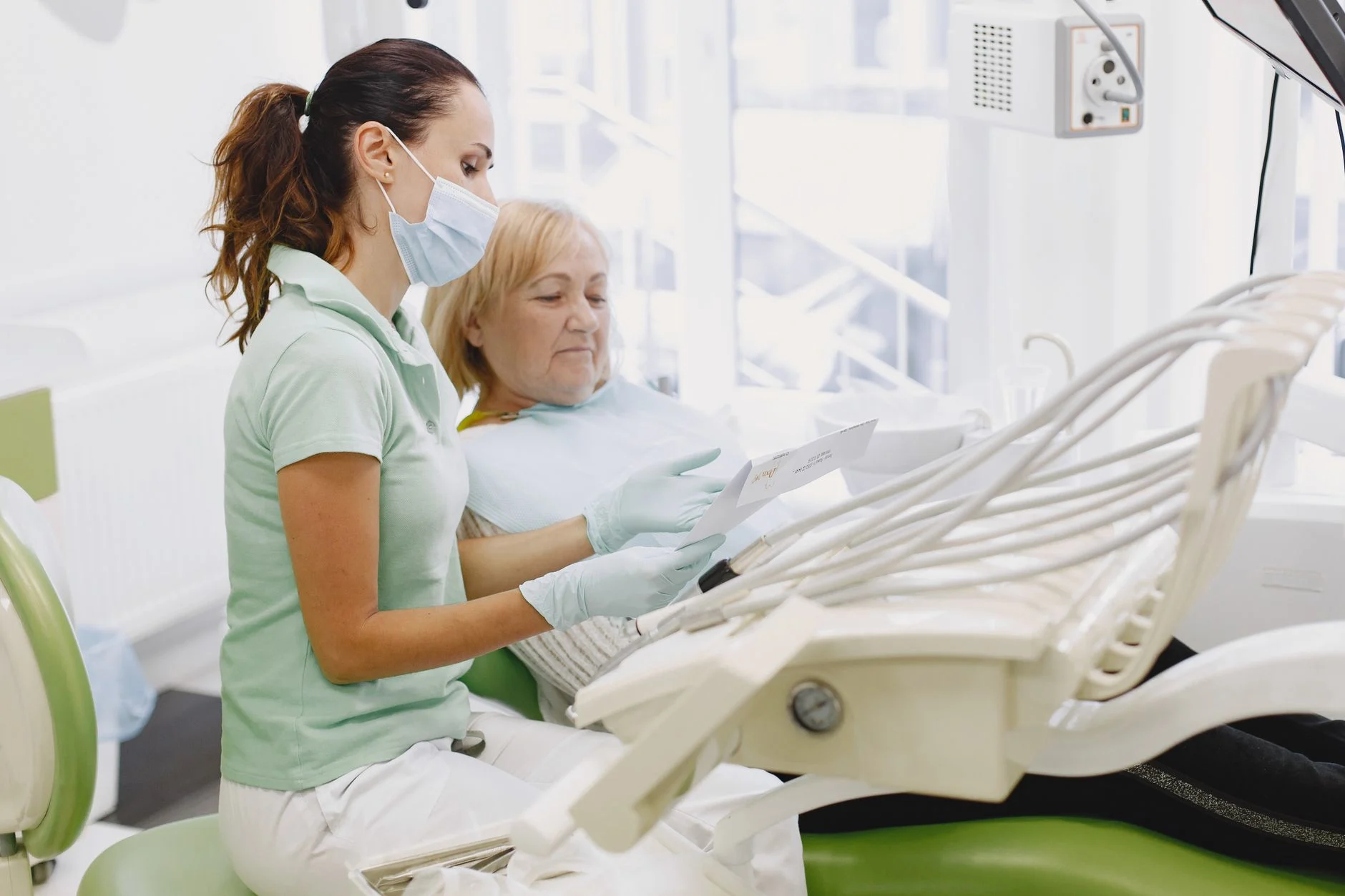
Source: stleonardsdental
Bacteria in the mouth form a sticky film on the implant surface called biofilm, an organised colony that adheres strongly to titanium. This film does not dissolve with mouthwash and does not disappear after a few days of more careful brushing. It constantly irritates the surrounding gum, and the body responds with inflammation that sustains itself.
A natural tooth has a periodontal ligament, an elastic layer of fibres that connects it to the bone and brings blood, defence cells and the capacity to repair. An implant does not have this layer, as it is fused directly to the bone through osseointegration. For this reason the area around it defends itself less well, and bacteria advance more easily into the depths.
Inflammation around implants is relatively common among patients who have them, especially a few years after placement. Caught at the stage where it affects only the gum, it usually resolves completely. Ignored for months, it leads to bone loss, and lost bone does not come back on its own. If you are preparing for such a treatment or want to understand what it involves, the dedicated dental implant page on the site explains the procedure in detail.
The difference between peri-implant mucositis and peri-implantitis
Peri-implant mucositis means inflammation limited to the soft tissue around the implant, that is, to the gum. The bone remains intact, and the condition is reversible through professional decontamination followed by proper hygiene at home. Peri-implantitis is the next stage, in which the inflammation has moved below the gum and has already destroyed part of the bone that holds the implant.
The transition from one stage to the other does not happen suddenly. Untreated inflammation pushes bacteria ever deeper, a pocket forms between the gum and the implant, and the toothbrush can no longer reach there. From that moment the bone begins to recede gradually.
A correct diagnosis completely changes the treatment plan. Mucositis is resolved through specialised cleaning and re-evaluation. Peri-implantitis requires measuring the bone loss and, frequently, surgical access to clean the implant surface.
The signs that show the implant has become infected
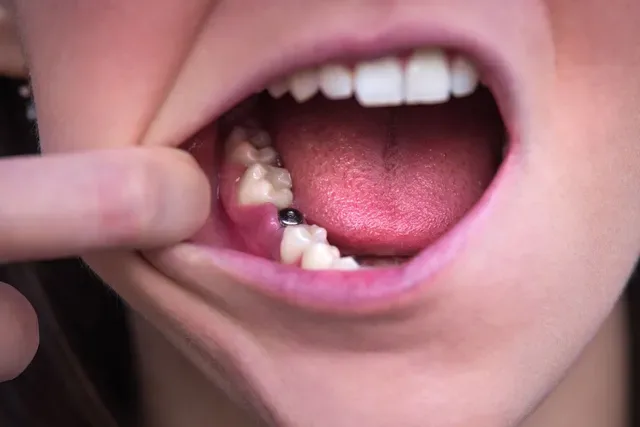
Source: freepik
Symptoms appear in a fairly predictable order, from subtle changes in the gum to implant mobility. The earlier you recognise the stage you are at, the simpler and less invasive the treatment.
What is normal in the first days after the procedure and what is not
After an implant is placed, swelling, moderate discomfort and slight bleeding are part of normal healing. In the first few days, these reactions should decrease progressively. As the area heals, slight tenderness to the touch may remain.
The warning sign appears when the direction of progress reverses. If the pain increases instead of decreasing, if the swelling grows after a period of improvement or if a fever develops, the situation is no longer part of natural healing. The same rules apply to bleeding that persists or worsens.
Red, swollen gums and bleeding around the implant
Bleeding when brushing or at the simple touch of a finger is the first sign of mucositis and the easiest to notice at home. Healthy gum around an implant is pink, firm and leaves no traces of blood on the toothbrush. When it becomes infected, it turns red or bluish, swells at the margin and takes on a soft consistency.
The absence of pain does not mean the absence of infection. The implant has no nerve, and the inflammation around it often progresses completely painlessly, even when the bone has already started to give way. Many patients only come to the clinic when pus appears, even though their gums had been bleeding during brushing for a long time.
Pus, an unpleasant taste and bad breath
A purulent discharge that comes out at the gum margin when you press lightly with your tongue or finger indicates an active infection, with bacteria multiplying below the gum line. Sometimes the pus is not directly visible, but it is given away by a metallic or bitter taste that keeps returning in the same area.
Bad breath that persists no matter how carefully you clean your teeth is another indication of the same problem. The smell comes from the by-products of bacteria sheltering in the pocket around the implant, not from the food you have eaten.
These signs call for a prompt appointment, not waiting. At this stage the infection is already established below the gum, and delaying can encourage bone loss.
Pain when chewing, gum recession and a loose implant
Pain that appears when you bite on the implant or press on the crown shows that the supporting structure is affected. A well-integrated implant withstands chewing forces without any unpleasant sensation. When it starts to hurt under pressure, either the surrounding bone has decreased or the prosthetic restoration is loading the implant incorrectly.
Gum recession can be seen in the mirror. The crown looks longer than before, and a greyish metal edge that was previously covered appears at the base. This is the visible sign that the level of the bone and gum has dropped.
Implant mobility radically changes the prognosis. Unlike a crown, which can come unscrewed and be refixed, an implant that moves in the bone means that osseointegration has been lost. In this case the chances of saving it are slim, and the discussion moves towards removal and rebuilding the area.
The causes that lead to a dental implant infection
Source: freepik
Most cases start with the build-up of bacterial plaque, followed by general factors that slow down healing and by technical problems with the prosthetic restoration. Errors in the initial planning are rarer, but have serious consequences. The technical basis of the treatment is explained on the page about implants, because each component can become a source of inflammation.
Bacterial plaque and insufficient hygiene around the implant
Plaque settles at the gum margin and under the restoration, exactly where an ordinary toothbrush slides past without cleaning. Over time, it can mineralise and turn into tartar, a rough surface to which bacteria cling even better. The area between the implant crown and the neighbouring tooth is a frequent starting point.
Brushing alone is not enough for an implant. You need interdental brushes sized to fit the space, dental floss passed under the contact point or a water flosser for areas that are impossible to reach mechanically. A patient who brushes conscientiously but does not clean between the teeth can develop mucositis.
Smoking, diabetes and other factors that slow down healing
Smoking reduces blood circulation in the gum, and the tissue receives less oxygen and fewer defence cells. The effect can be seen in the healing after placement, when osseointegration proceeds more slowly. It can also be seen when inflammation that develops later advances faster in smokers than in non-smokers.
Uncontrolled diabetes acts in the same direction, affecting the small blood vessels and the immune response. A patient with well-controlled blood sugar has a risk close to that of patients without diabetes, while consistently high levels can make healing more difficult. Certain treatments that affect bone metabolism can also matter, which is why your full medical history is discussed with the doctor before any procedure.
This explains why two patients with the same hygiene can have different outcomes. Your general health matters just as much as your cleaning routine.
Residual cement and a poorly fitted prosthetic restoration
When the crown is fixed with cement, some of the material can be pushed under the gum and remain there undetected. That cement residue behaves like a rough foreign body that collects plaque and sustains chronic inflammation. It is an important hidden cause of peri-implantitis.
A crown with poorly sealed margins or an overly bulging contour produces the same effect from another direction. It creates spaces you cannot clean and blocks access for the interdental brush. Occlusal overload, meaning a crown that makes first contact when you bite, adds mechanical stress on top of the inflammation and speeds up bone loss.
Incomplete planning and insufficient bone at the time of placement
The position of the implant is decided before the procedure, based on a three-dimensional assessment of the bone. Without a 3D scan and without a surgical guide, the implant can end up too close to a neighbouring root, too far towards the cheek side or in bone that is too thin. The remaining bone wall becomes fragile and can give way more easily in the presence of inflammation.
The quantity and quality of the bone matter just as much. When the volume is insufficient, a bone graft carried out beforehand creates the necessary support. Periodontal disease left untreated before implant placement also brings in the bacteria that have already affected the bone of the natural teeth. The details of the situations in which the procedure is postponed are explained at length in the article about when a dental implant cannot be placed.
Missed post-operative check-ups complete the picture. Many problems appear without symptoms, and a check-up X-ray can identify them before the patient feels anything.
How the diagnosis is made at the clinic
Diagnosing a peri-implant infection starts with a clinical examination and probing, a measurement taken with a fine periodontal probe around the implant. The doctor notes how deep the probe goes at several points, whether there is bleeding and whether any discharge comes out. These values are compared with previous measurements, if there are any in your records.
An X-ray shows the level of the bone next to the implant, and a 3D scan provides the complete picture of the defect, including the bone walls that cannot be seen on an ordinary X-ray. This makes it possible to measure the bone loss and to choose between a non-surgical and a surgical approach.
Checking the bite and the prosthetic restoration completes the assessment. The doctor checks the biting contacts, the seal of the crown margins and the presence of cement left under the gum. Sometimes the crown is removed for direct inspection of the abutment.
You cannot make this distinction at home. A swollen gum can look similar in mucositis and in peri-implantitis, and what separates them is the condition of the bone, which is visible only on imaging.
How a dental implant infection is treated
Treatment follows a clear sequence, from the least invasive procedure to the most extensive. It begins with non-surgical decontamination, the response is re-evaluated, and surgery comes into the discussion if the inflammation persists or if bone has already been lost. For context, the article about the stages of a dental implant describes the normal course of treatment, against which any deviation is measured.
Non-surgical decontamination and professional cleaning
The first stage means removing plaque and tartar from the implant surface with dedicated instruments, made of titanium or of materials softer than the implant metal. Unsuitable instruments can scratch the surface and create micro-retention areas where bacteria cling more easily.
The session can combine low-power ultrasound, air polishing with a fine airflow-type powder for the subgingival areas and local antiseptics applied professionally. In mucositis and early forms of peri-implantitis, this stage can stop the inflammation when home hygiene is corrected at the same time.
Re-evaluation takes place after the period the gum needs to respond to treatment. The depths are measured again and bleeding is checked. If the values have returned to normal, the case moves into monitoring, and if not, the next stage begins.
What role antibiotics play and why they do not solve the problem on their own
An antibiotic reduces the bacterial load in the tissue and helps control an acute infection, but it does not detach the biofilm from the implant surface. That film is removed mechanically, through direct cleaning, and the active substance has difficulty reaching the bacteria protected inside it.
For this reason, medication taken on its own may temporarily relieve the symptoms, then the inflammation returns from the same place. Self-medication can mask the signs precisely during the period when the bone continues to recede. The medication regimen, when needed, is determined by the doctor after an examination, as an adjunct to decontamination.
Surgical treatment and bone regeneration
When the inflammation persists after decontamination, the doctor creates access by raising a flap, that is, a controlled lifting of the gum to expose the implant surface and the bone defect. Direct cleaning, with full visibility, removes the granulation tissue and the deposits from the exposed threads, which is difficult to achieve through closed gum.
If the bone defect has walls that can support the material, a bone substitute can be added, covered with a membrane that guides regeneration. Wide defects are less suitable for regeneration and may require reshaping of the tissue, so that the area can be cleaned effectively afterwards.
Initial healing takes a few weeks, and bone consolidation requires a longer period, during which the area is cleaned gently and pressure on the implant is avoided. Success depends on the shape of the defect, on stopping smoking, on the quality of hygiene and on the rigour of subsequent check-ups.
When the implant has to be removed and what comes next
An implant becomes unsalvageable when it moves in the bone or when the bone loss is extensive. Added to these criteria are implant fracture and infections that return after repeated surgical treatments. Removal is usually carried out with special instruments, preserving as much of the remaining bone as possible. The full context of possible complications is detailed in the article can you die from a dental implant.
After extraction, the area is left to heal, and if the remaining bone is insufficient, a bone graft is planned. The interval until a new implant is usually measured in months, not weeks, and the exact duration depends on the volume of bone rebuilt and on the individual response.
When re-implantation is not indicated, the classic prosthetic options remain, from a bridge supported on the neighbouring teeth to a partial denture. The decision is made after the area has been assessed, and no treatment plan can guarantee the outcome in advance.
How to prevent infection after an implant is placed
Source: newstartdenture
Prevention is built on three levels: care in the first few days, a long-term daily routine and regular check-ups at the clinic. The choice of implant system also matters, and the article about the top 10 dental implants explains what sets the available options apart.
In the first days after the procedure, eat soft foods that are cold or at room temperature, chew on the opposite side and avoid hot drinks. Rinse without swishing the liquid around your mouth, letting it flow out, so as not to disturb the blood clot. Give up straws and smoking during this period.
The long-term daily routine requires a few implant-specific tools.
- A soft toothbrush, with movements from the gum towards the crown, focusing on the gum margin
- Interdental brushes in the exact size of the space, chosen together with the doctor at a check-up
- Special dental floss for implants or superfloss, passed under the body of the restoration
- A water flosser at medium pressure for areas that not even the interdental brush can reach
Check-ups and professional cleanings are done more often for patients with implants than for other patients, with a periodic check-up X-ray. At these visits the bite is also checked, because natural wear of the teeth changes over time how the implant crown takes the force when you bite.
Giving up smoking and keeping a general health condition under control have a direct effect on the risk. These are important changes you can make outside the clinic.
What to do in practice if you suspect an implant infection
Repeated bleeding when brushing, red and swollen gums or new sensitivity to pressure call for a prompt appointment. Pus, pain that increases from one day to the next, fever, swelling that spreads towards the cheek or an implant that moves mean an emergency and a same-day assessment.
For the consultation, prepare the information that can speed up the diagnosis.
- The date of the procedure and, if you know them, the type and brand of the implant
- The X-rays and documents you received when it was placed
- When the first signs appeared and how they have developed
- Your general health conditions and the treatments you are currently following
Until the consultation, avoid self-medicating with antibiotics left over from other treatments, because they alter the clinical picture and delay the correct diagnosis. Do not postpone the appointment, even if the symptoms seem to settle on their own, because an apparent lull can hide progression below the gum.
A dental implant infection caught at the mucositis stage can be resolved through treatment at the clinic and by correcting your hygiene at home. The same problem left for a long time can lead to lost bone and to surgery.
The difference between the two scenarios is made by the moment you pick up the phone, not by the initial severity of the symptoms. For a full assessment, the implantology and periodontology sections of the site show what each type of procedure involves.