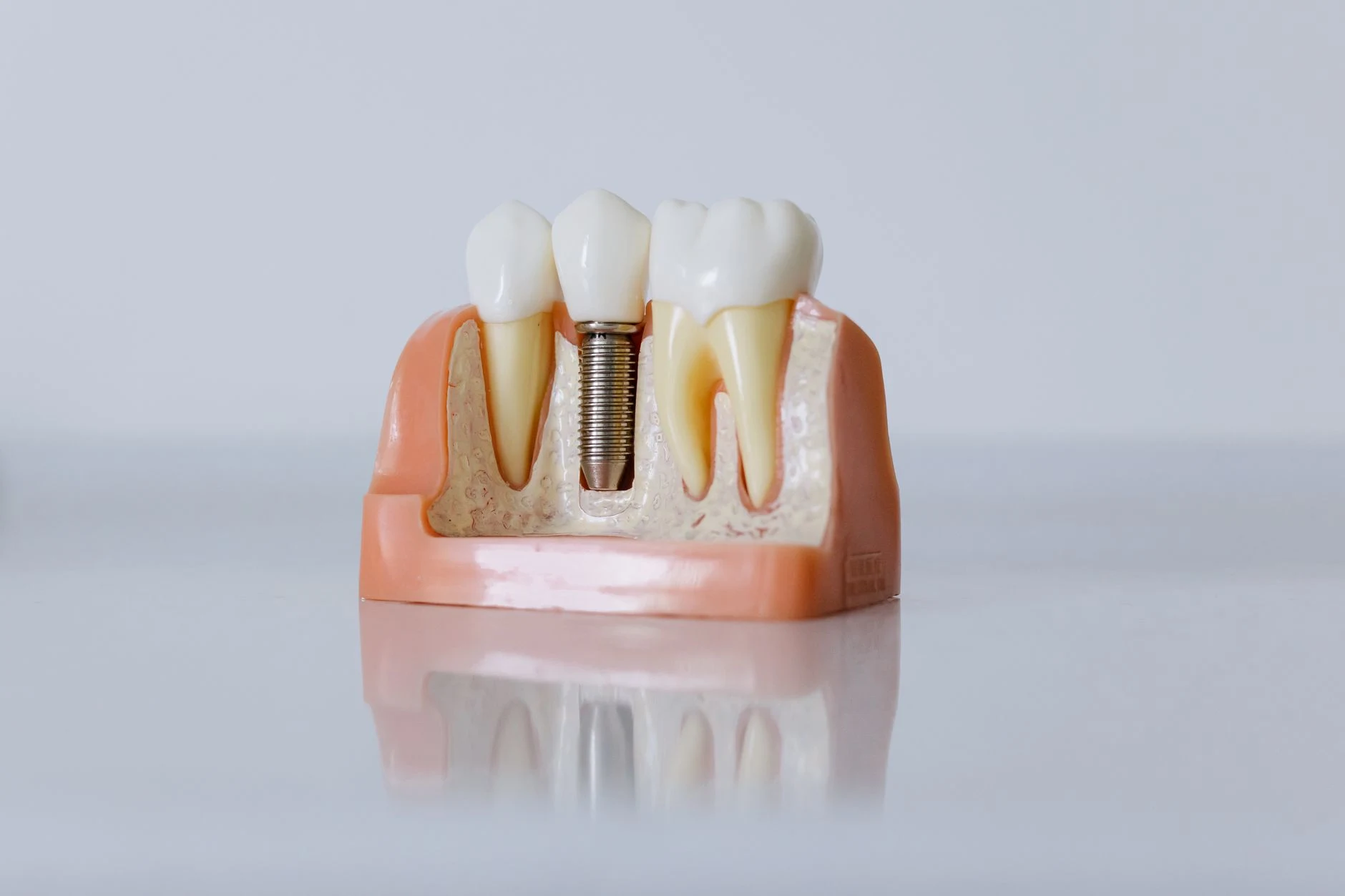
Several dozen brands of dental implants are sold on the Romanian market, and the differences between them cannot be seen with the naked eye. What matters is the surface of the titanium screw, the volume of clinical studies behind the system and the prosthetic parts fitted on top of the implant. A top 10 of dental implants becomes useful to you precisely when you have two quotes on the table and each one names a different brand.
The order of this ranking takes into account the clinical documentation accumulated for each system, the surface treatment, the quality of the prosthetic system and how easily you can find components ten years from now. The top positions are held by the systems used at the clinic in Pitești, Straumann and Neodent, while the other eight complete the picture of the market. The stakes are concrete. An implant that is wrong for your situation means a second procedure, months of waiting for the bone to heal and a total cost higher than the difference you saved at the start.
If you would also like a technical look at materials and shapes, the details are explained in the article on types of dental implants.
1. Straumann, premium Swiss implant
Straumann is a Swiss system and one of the most studied in implantology, with long-term clinical research followed at universities around the world. This means that a dentist who uses it knows fairly precisely what behaviour to expect in healthy bone, in thin bone or in a patient who smokes. The implant surface is chemically treated, and its roughness helps bone cells attach to the titanium more quickly. This process is called osseointegration, meaning the anchoring of the implant in the bone, and its speed determines when you can receive the final restoration.
In practice, Straumann shows its value in difficult cases, and the typical situations are these:
- little bone in width or height, where there is little room for manoeuvre;
- regenerated bone after bone grafting, which behaves differently from natural bone;
- slower healing, as happens in patients who smoke;
- full-arch rehabilitations such as All on 4 and All on 6, in which four or six implants support an entire arch.
In all these situations, the margin for error is small, and the predictability of a well-documented system carries a lot of weight. A second advantage comes from the material. Roxolid is an alloy of titanium and zirconium, stronger than ordinary titanium, so it allows implants of smaller diameter without any loss of strength. In practice, you can avoid a bone graft where the ridge is narrow. The prosthetic components remain available in the long term and are recognised in any serious practice, so a crown can be redone ten years from now, even if you move to another city. You can find details about this system on the dedicated Straumann implant page.
2. Neodent, Brazilian implant from the Straumann group
Neodent is a Brazilian brand that is part of the Straumann group, and this membership means a real transfer of technology, beyond the legal act. The transfer covers surface treatment and production control. This explains why the system behaves predictably in routine cases. For patients on a tighter budget, the ratio between cost and clinical performance is the most balanced in the entire ranking.
The system’s strong point is primary stability, meaning the firm anchoring of the implant in the bone at the very moment of insertion. The better it is, the greater the chances of an immediate loading protocol. You receive a temporary restoration within the first few days after the procedure and are not left without teeth during the healing period. The thread design helps exactly in this respect, which is why Neodent is frequently chosen for implant rehabilitations.
The difference compared with Straumann lies in the volume of clinical studies accumulated over time and in the range of solutions for rare situations. The quality of the material and the rigour of manufacturing remain at the same level. In an ordinary case, with sufficient bone and good hygiene, choosing Neodent is just as good as choosing a premium brand. The long-term result depends more on execution than on the logo. The brand is affordable, not cheap, and the difference between those two words shows in the documentation that comes with it. The page on the Neodent implant explains in detail the situations in which it is recommended.
3. Nobel Biocare, premium Swedish implant
Nobel Biocare has Swedish roots and a direct link to the discovery of osseointegration, the phenomenon on which all of modern implantology rests. Research carried out in Sweden gave rise to the idea that titanium can bond with living bone. The system brought this principle into the everyday practice of dental surgeries.
The brand has remained associated with immediate loading protocols and full-arch rehabilitations, that is, situations in which a patient with no teeth on one arch receives a fixed restoration supported by a few implants. These cases are planned on the basis of a 3D scan. The position of each implant is determined before the procedure, according to the actual bone available.
From a technical point of view, the conical connection explains a good part of the result. The cone-shaped joint between the implant and the abutment distributes chewing forces towards the inside of the implant and leaves less room for micro-movements at gum level. The effect shows over time, in the stability of the surrounding tissue and in the bone that remains at the level of the implant neck.
You choose it when you have extensive tooth loss to address and want a treatment plan with clear stages, backed by a brand used for decades in clinics around the world. The prosthetic components are easy to find. Dental technicians in Romania have worked with them for a long time, so any later work on the restoration becomes simpler.
4. Zimmer Biomet, the American implant with a porous structure
Zimmer Biomet is an American system developed by one of the world’s largest manufacturers of medical devices, and in dental implantology it is valued for technologies aimed at achieving the best possible bone stability from the very first months after insertion. The brand has decades of clinical experience behind it and is used in numerous university centres and clinics around the world.
One of its distinctive features is the treated surface and the porous structure of some models in the range, designed to promote contact between bone and implant during osseointegration. The connection between the implant and the abutment is designed to reduce micro-movements and help maintain marginal bone stability in the long term. These characteristics make it suitable both for single-tooth restorations and for more complex rehabilitations.
Zimmer Biomet is a suitable choice when the aim is a well-documented system, with long clinical experience and prosthetic components available in the long term. As with any dental implant, however, the final result depends equally on 3D planning, on the dentist’s experience and on keeping up with regular check-ups after treatment.
5. Astra Tech, Swedish implant
Astra Tech is a Swedish system that belongs to the Dentsply Sirona group and has made its name in cases where appearance matters as much as function. Its reputation comes from the way the gum settles around the implant, the detail that decides whether a front tooth looks natural or visibly artificial.
Two design elements explain this. The first is the connection between the implant and the abutment, tight and sealed, which limits the space where bacteria can accumulate. The second is the emergence profile, meaning the shape of the restoration where it comes out of the gum, just like the neck of a natural tooth. When this shape imitates the tooth it replaces, the gum settles around it without receding and without leaving visible grey shadows.
In the visible area of the smile, where the lip uncovers the gum line when you laugh, the difference between a good result and a very good one is measured in millimetres of soft tissue. This is exactly why Astra Tech is often recommended to you. The bone around the implant neck tends to remain stable for years. As a result, the gum also stays at the right level.
The investment is most clearly justified for a lost incisor or canine, especially if you have thin gums and your smile reveals the gum line. For a molar hidden at the back, the same advantages matter much less.
6. MIS Implants, Israeli implant
MIS Implants is an Israeli system widely present in Europe and frequently found in quotes in Romania. It is positioned in the middle range, between premium brands and budget options, and that is also where it finds its real usefulness.
The implant design and the surgical kit are designed for a simplified protocol, with fewer drilling steps before insertion. The practical result is a shorter procedure. This matters if you find long procedures hard to tolerate or if you are having several implants placed in the same session. The available clinical documentation is consistent for a system in this price category, even if it does not compare in volume with that of the brands at the top of the ranking.
The system gives stable results when you have lost a premolar or a molar, have sufficient bone in height and width, your gums are healthy and you do not suffer from conditions that slow down healing. In such situations, the result at five or ten years depends more on your daily hygiene than on the chosen brand.
The prosthetic components are easy to order from dental suppliers in Romania, and delivery times remain short. Before accepting the quote, however, ask which implant line from the manufacturer’s range will be used, because parts do not always fit from one line to another.
7. Megagen, South Korean implant
Megagen is a South Korean system that has quickly risen in the preferences of European dentists, especially thanks to its good performance in soft bone. In recent years South Korea has become an important manufacturer of implants, and Megagen is the brand from there with the greatest visibility on the Romanian market.
Its particularity lies in the spiral thread design, with wide, sharp threads that cut into the bone as the implant advances and compact it around them. In soft bone, where an ordinary implant would sit too loosely, this shape achieves a firm grip from the start. This situation occurs most often in the upper jaw, in the back area, where the bone is spongy and thin and the sinus limits the available height.
Good stability from the moment of insertion opens the way to immediate loading, meaning the fitting of a temporary restoration shortly after the procedure. When even this is not enough bone, the discussion moves towards a sinus lift procedure, which creates the necessary height before implant placement.
One thing is worth clarifying at the consultation. Ask the dentist how often they work with this system and how the prosthetic parts for it are ordered. A system rarely used in a practice means a less practised routine, and you want a restoration that can be easily repaired years from now.
8. Bredent, German implant
Bredent is a German manufacturer that sees the implant as part of a complete chain, from the titanium screw to the material from which the final restoration is made. The company produces implants, prosthetic components and laboratory materials alike. The advantage shows in the way the parts fit together without improvised adaptations.
Its own materials for superstructures, especially fibre-reinforced composites, are more elastic than metal and absorb part of the chewing forces before they reach the bone. If you wear an extensive restoration supported by several implants, this cushioning protects both your implants and the bone around them.
It is the right option if you have extensive tooth loss to address and are facing treatment in which surgery is combined with extensive prosthetic work carried out in stages. If you know you react to dental alloys, metal-free superstructures offer you a useful alternative, because they reduce contact between tissues and metal parts.
Such a system requires a properly equipped clinic and close collaboration with a laboratory used to working with these materials. Without the laboratory side at the same level, the advantages remain on paper only. This is where you see the difference between a practice that places implants and one that sees the case through to the end.
9. BioHorizons, American implant
BioHorizons is an American system built around a precise idea: that the health of the gum around the implant decides how the restoration looks and how long it lasts. The brand’s clinical documentation is extensive, and research has focused on the contact area between the implant and the soft tissue.
The implant neck area receives a surface treatment with very fine microchannels, created by laser. The gum fibres align along these channels and attach to the titanium instead of sliding past it, forming a kind of cuff around the implant. This barrier makes it harder for bacteria to reach the bone. The bone level around the neck thus remains stable for longer, instead of gradually decreasing.
You choose this system when you need to replace a single tooth, when you are receiving an implant-supported bridge or when you have thin gums or a history of treated periodontal disease. These are exactly the situations in which a recession of a few millimetres completely changes the final appearance of the restoration.
In terms of price, BioHorizons sits slightly below the European premium brands, without dropping into the budget range. You consider it when you want a stable aesthetic result but also need to keep the total treatment budget in mind.
10. Alpha Bio Tec, budget Israeli implant
Alpha Bio Tec is an Israeli system with a long clinical history, on the market for several decades and part of a large international group in the dental industry. This link gives it a level of production control that many brands in the same price category lack.
Its affordable price explains why it appears so often in cheap quotes in Romania. The lower cost of the implant leaves room for manoeuvre in the overall budget. For many patients, this makes the difference between starting treatment now and putting it off for another year. Compared with the brands at the top of the ranking, the difference lies in the volume of very long-term studies, in the options available for rare cases and in the narrower range of fine prosthetic components.
The result can be very good in simple cases. If you have lost a molar, the bone is healthy and sufficient, the gum shows no inflammation and you have your professional cleanings on time, the implant has every condition it needs to integrate. Here the difference compared with a premium brand narrows considerably.
Before choosing a budget option, it is worth clarifying three things at the consultation:
- Whether the prosthetic parts will be easy to find in five or ten years.
- Whether the system suits the specific situation in your mouth.
- What happens, in terms of procedure and price, if the implant does not integrate.
What matters more than the brand when you choose a dental implant
The best dental implant for you is the one chosen after a real analysis of your bone, not according to its position in some ranking. Planning starts with a 3D scan, which shows the height and width of the bone at every point, the position of the sinus and the path of the nerve. Only after this measurement can anyone say whether the available bone will support the desired implant or whether bone grafting is needed first. There are also situations in which the procedure has to be postponed or replaced with another solution, and this topic is covered in detail in the article on when a dental implant is not possible.
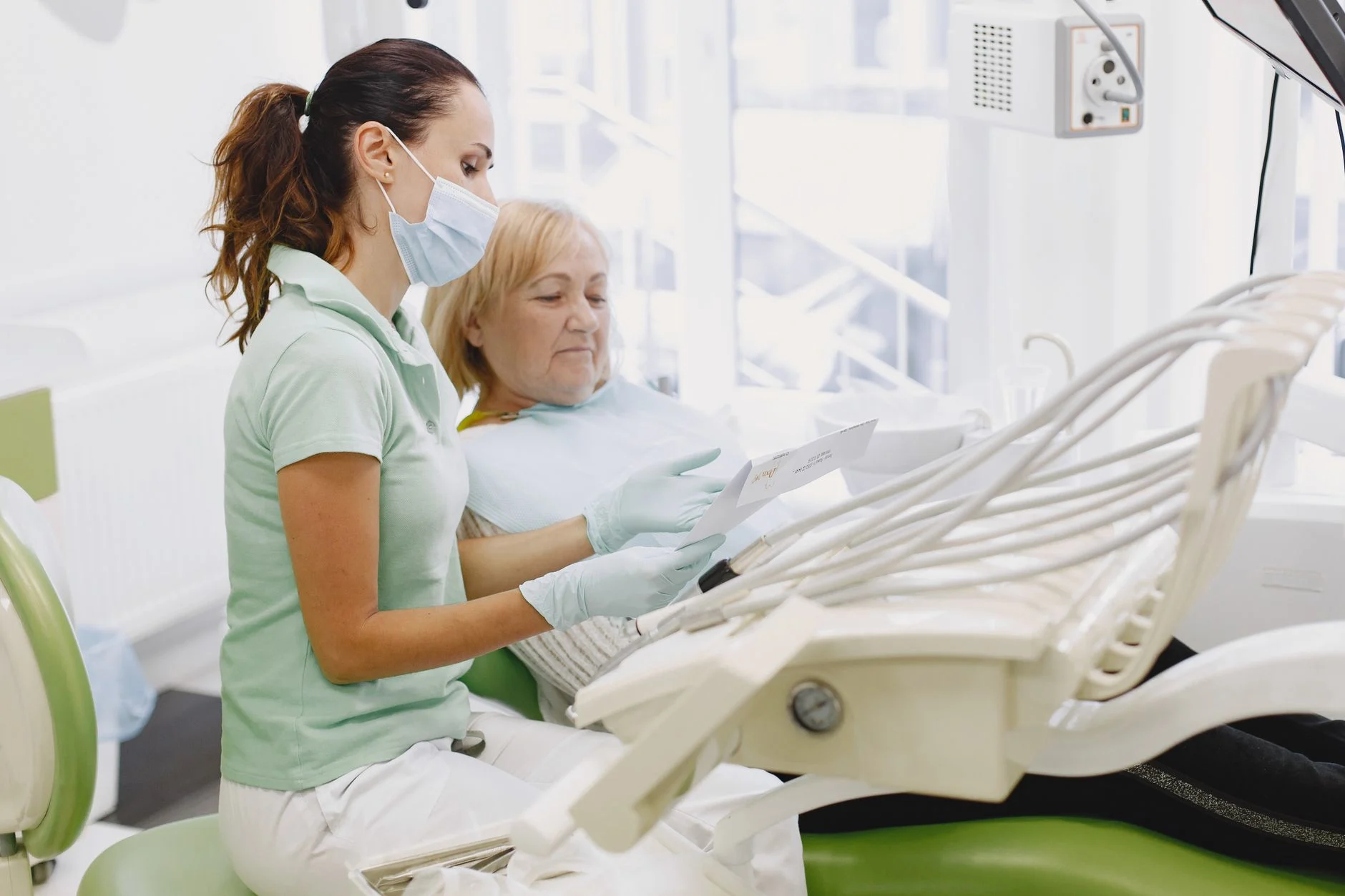
The second factor is execution. The position, angle and depth at which the implant is inserted directly influence the way the bone and gum settle around it. A premium implant placed incorrectly gives poorer results than a mid-range one placed correctly. Just as important is what is fitted on top, meaning the crown material, the fit of the margins and the way the restoration touches the neighbouring teeth, as well as those on the opposite arch. A restoration that presses unevenly transmits the wrong forces to the bone, regardless of the implant brand. The assessment consultation for a dental implant in Pitești begins precisely with these measurements, before any discussion of manufacturer names.
The last factor is entirely in your hands. Daily brushing, cleaning between your teeth and regular check-ups keep the gum around the implant healthy. Smoking and superficial hygiene cancel out any technical advantage of the brand, because chronic inflammation leads to bone loss, and lost bone does not regenerate on its own.
Three things are worth clarifying at the consultation, before you sign the treatment plan:
- Which brand and which implant line will be used in your case and why that one in particular was chosen.
- How easily the prosthetic components can be found in ten years and what happens if you change practice.
- What the plan provides if the implant does not integrate, in terms of procedure and possible additional costs.
Book an assessment for your case
The implant is chosen after the bone has been measured, not before. The clinic in Pitești works with Straumann and Neodent, with planning based on a 3D scan, and at the consultation you find out exactly which options suit your situation and why.
Disclaimer: This ranking is for guidance only and is based on the available clinical documentation, the experience accumulated with each system and the availability of prosthetic components. The implant is always chosen according to the specific characteristics of each patient.