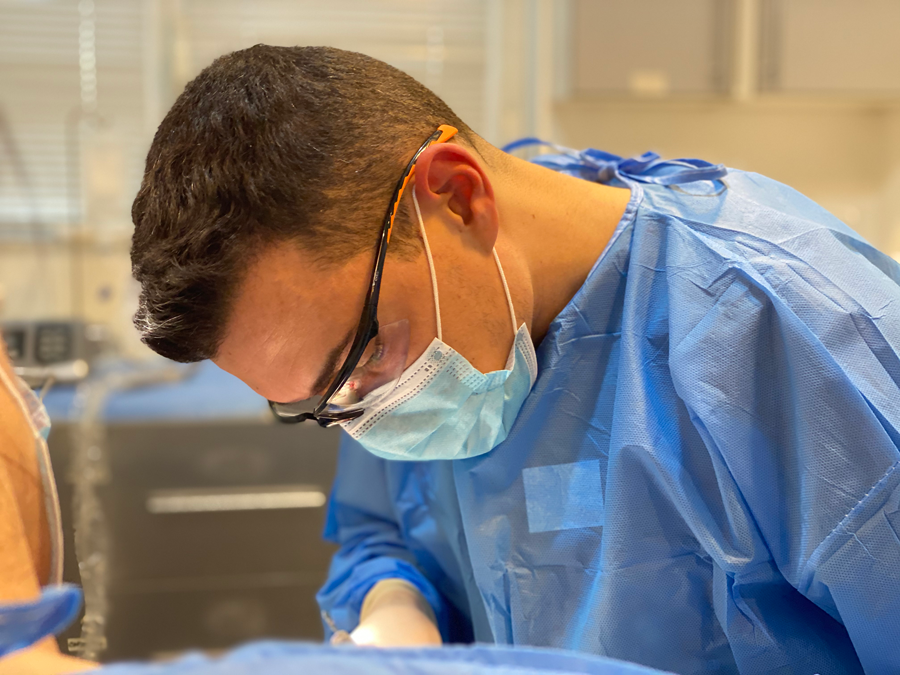
Dental surgery is the branch of dentistry that deals with treatments requiring surgical procedures on the teeth, gums and jawbones. These include tooth extractions, removal of wisdom teeth, treatment of cysts and placement of dental implants.
The aim is to restore oral health and prepare the teeth for other treatments.
Did you know that tooth extraction also falls under dental surgery procedures? So not all operations are as complicated as you might have imagined. Here are all the oral surgery procedures available to you at our clinic:
So, whatever problem you have, you will find the solution at the Dr. Radu Dumitru Clinic! Don’t hesitate any longer – come in for a consultation!
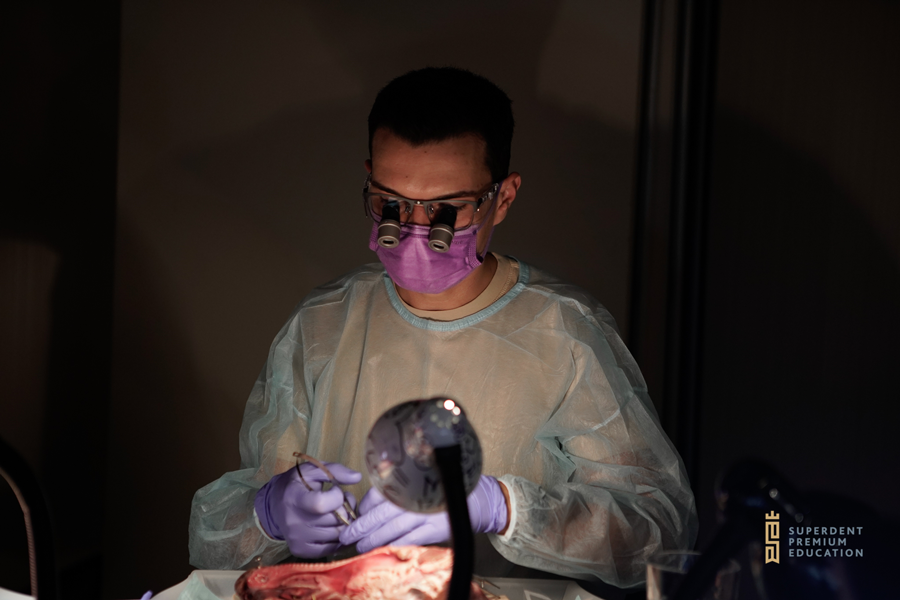
1. Initial consultation
A clinical and radiological assessment is carried out to establish the diagnosis and treatment plan.
2. Preparing the patient
The procedure is discussed, pre-operative recommendations are given and local anaesthesia is applied for maximum comfort.
3. Performing the procedure
The dentist performs the surgical procedure (e.g. extraction, cyst removal, implant placement) using modern, minimally invasive techniques.
4. Post-operative care
Clear instructions are given for the recovery period and, if necessary, medication to aid healing.
5. Follow-up check
The patient returns to the clinic for monitoring and to check how healing is progressing.
Dental surgery procedures can carry risks and complications, just like any other operation. These include:
Don’t be alarmed – some of these are not serious and can be prevented if you follow our specialists’ instructions, and if needed you can always come back to the clinic to find a solution. At the Dr. Radu Dumitru Clinic, the medical team is highly trained, observes all hygiene standards and takes care of your health!
You may feel pain and experience bleeding or swelling after the operation, depending on its complexity. However, the dentist will prescribe pain medication and give you all the necessary recommendations, so when you leave our clinic you will know exactly what to do after the operation.
Recovery time after dental surgery varies from person to person.
In general, you will feel as good as new after about a week, and within 1-3 days you will be able to return to school or work. If a more extensive procedure was needed, it will take a little longer to recover.
At the Dr. Radu Dumitru Clinic in Pitești, we offer a wide range of dental surgery services, from simple procedures to complex treatments, all performed with modern and safe techniques. These include:
Recovery time after dental surgery varies from person to person.
In general, you will feel as good as new after about a week, and within 1-3 days you will be able to return to school or work. If a more extensive procedure was needed, it will take a little longer to recover.
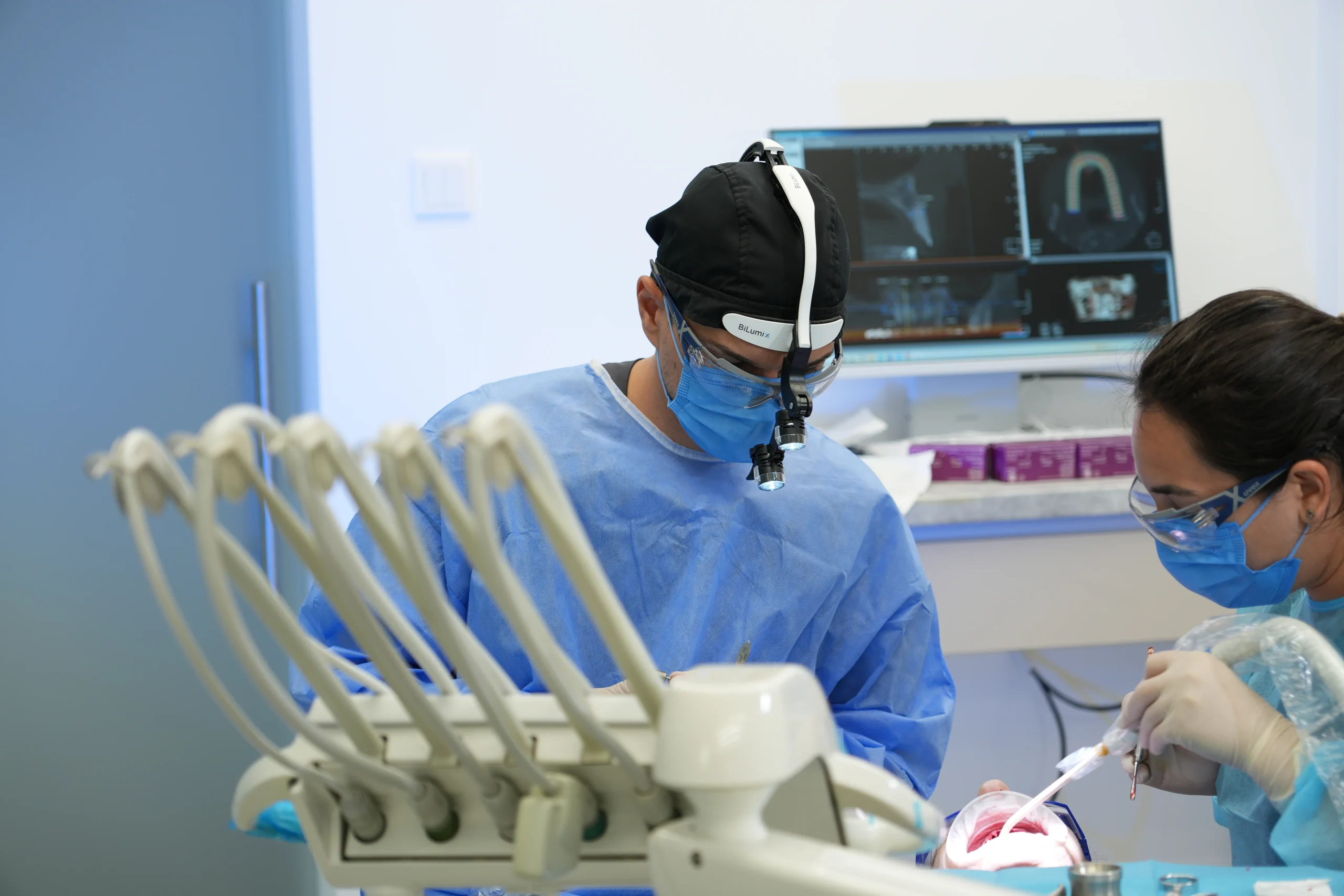
At the Dr. Radu Dumitru Clinic, we focus on safety, precision and comfort, using modern technology and state-of-the-art materials:
We want every procedure to be a safe and as pleasant an experience as possible, so that you can regain your dental health with confidence.
Frequently asked questions
Fill in the form or call +40 771 648 386
Depending on the procedure, recovery can take from a few days to a few weeks. Most patients resume their usual activities after 1–3 days, following the dentist’s instructions.
Extraction is recommended when wisdom teeth are impacted, partially erupted, cause pain or inflammation, or affect neighbouring teeth.
No. You should wait until the anaesthetic has worn off and follow a soft diet for the first few days to promote healing.
Bone augmentation is the procedure in which bone or special materials are added to rebuild bone volume. It is recommended when the upper or lower jawbone does not have sufficient density to support dental implants.
Careful oral hygiene, avoiding hard and hot foods, applying cold compresses to reduce swelling and following the treatment recommended by the dentist.
Yes, but a careful assessment is required and, in many cases, collaboration with your attending doctor. Conditions such as diabetes, high blood pressure or heart disease require additional precautions.
Implantology and surgery
Dental implants in Pitesti ▷ Turn to our services with confidence and discover how easy it is to…
Neodent implant. Fast, safe and effective treatments for a flawless smile
Straumann implant. Fast, safe and effective treatments for a flawless smile
All-on-4 or All-on-6! ▷ Turn to our services with confidence and discover how…
Fixed dental prosthesis Pitesti ▷ Turn to our services with confidence and discover how easy it is to…
Find out how the sinus lift procedure helps you get stable implants even with a bone deficit.…
We assess your situation, explain your options and give you a clear treatment plan, with the stages and costs set out from the start.