Implantology and surgery
I can help you regain your smile, comfort and self-confidence in just 24 hours, whatever the reason your teeth need dental implants
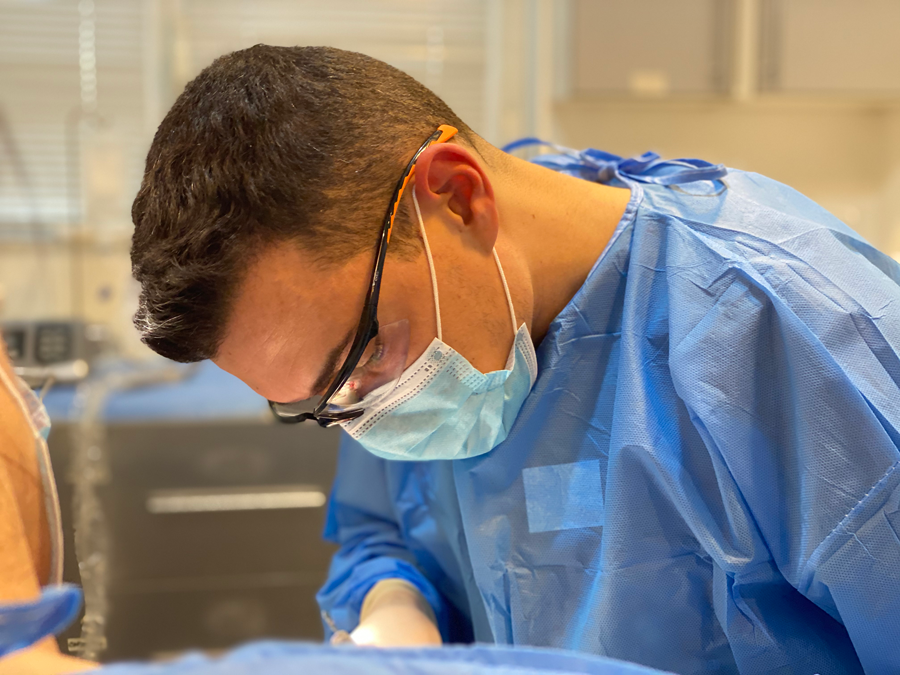
A dental implant is a modern, safe solution that lets you replace a missing tooth without affecting the neighbouring teeth. Essentially, it is a screw made of titanium or zirconia, a biocompatible material, which integrates into the upper or lower jawbone and acts as an artificial root. A dental crown, bridge or even a denture is then fixed onto this support, depending on the case.
This gives you a fixed, natural-looking tooth that restores not only function but also confidence in your smile.
Unfortunately, not all of us are lucky enough to enjoy healthy teeth all our lives. Perhaps you too have already faced one or more missing teeth, periodontal problems or the discomfort of a removable denture.
A dental implant is recommended in several situations:
1. Initial consultation and treatment plan
Everything begins with a detailed discussion and a set of investigations (X-ray, CT). This way, the dentist can assess your oral and bone health and propose a personalised plan: how many implants are needed, which type of prosthetic restoration is suitable and what the next steps will be.
2. Preparing for the implant
If needed, tooth extractions, periodontal treatment or bone grafting are carried out. These procedures prepare the ground so that the implant can be fixed correctly and remain stable in the long term.
3. Placing the dental implant
The implant, a small screw made of titanium or zirconia, is inserted into the bone in place of the root of the missing tooth. The procedure is performed under local anaesthesia, so you feel no pain. In many cases, post-operative discomfort is minimal and easily managed.
4. The osseointegration period
After placement, the implant needs a few months (usually between 3 and 6) to integrate into the bone. This process is called osseointegration and is essential for the future stability of the restoration. During this period, you can wear a temporary restoration so you are not left with unsightly gaps.
5. The prosthetic stage (fitting the dental crown)
Once the implant is fully integrated, an abutment is attached and the final crown is fitted on top of it. It is made from high-quality materials (ceramic, zirconia) and perfectly matched in shape and colour to your natural teeth.
6. Monitoring and care
A well-made dental implant can last for decades, but it is important to come back for regular check-ups and follow the rules of oral hygiene. This ensures that your investment lasts over time and that you can enjoy a healthy, stable smile.
Natural, aesthetic appearance – the crown fitted on the implant perfectly imitates the shape and colour of the natural tooth.
Stability and comfort – unlike removable dentures, implants stay fixed and cause no discomfort.
Full functionality – you can eat any food without restrictions and without fear of the restoration moving.
Protects neighbouring teeth – there is no need to grind down healthy teeth, as happens with conventional dental bridges.
Prevents bone loss – the implant stimulates the jawbone, maintaining its volume and health.
Long-term durability – with proper care and regular check-ups, implants can last a lifetime.
Improved speech – with no gaps or unstable dentures, pronunciation becomes clear and natural.
Greater self-confidence – a complete, healthy smile helps you feel more confident in any situation.
The role of a dental implant is to replace the root of a lost tooth and provide a solid base for a prosthetic restoration (crown, bridge or fixed denture). Essentially, it is the foundation on which your new tooth is built.
Its main roles are:

Fill in the form or call +40 771 648 386
Frequently asked questions
We use modern implants made of titanium or zirconia, 100% biocompatible materials renowned for their perfect integration into the bone and long-term durability. The type of implant is chosen according to the clinical situation and each patient’s personalised plan.
In many cases, the implant can be placed immediately after extraction (immediate implant). In other situations, a healing period for the bone and gum of a few weeks to a few months is needed to ensure a solid base.
Yes, untreated gum disease can affect the stability of the implant. That is why, before the procedure, it is important for the gums to be healthy and, if necessary, for periodontal disease to be treated.
The procedure is performed under local anaesthesia, so you will not feel any pain. After the procedure there may be slight discomfort, which is managed with medication recommended by the dentist.
An implant is not recommended in cases of uncontrolled disease (poorly controlled diabetes, severe clotting disorders, active cancer), during pregnancy or for patients with poor oral hygiene.
Yes, patients with well-controlled diabetes can benefit from a dental implant. However, careful monitoring and close collaboration between the dentist and the attending doctor are needed.
Yes, modern implants do not interfere with imaging investigations such as MRI. The materials they are made from are safe and do not affect the procedure.
As a rule, local anaesthesia is used, similar to that used for ordinary dental treatments. In more complex cases or for anxious patients, conscious sedation may be used.
Implantology and surgery
Neodent implant. Fast, safe and effective treatments for a flawless smile
Straumann implant. Fast, safe and effective treatments for a flawless smile
All-on-4 or All-on-6! ▷ Turn to our services with confidence and discover how…
Fixed dental prosthesis Pitesti ▷ Turn to our services with confidence and discover how easy it is to…
Find out how the sinus lift procedure helps you get stable implants even with a bone deficit.…
Dental surgery ✔️ Modern and effective treatments ✔️ Get rid of the pain and discomfort caused by dental problems ⭐Dr.…
We assess your situation, explain your options and give you a clear treatment plan, with the stages and costs set out from the start.