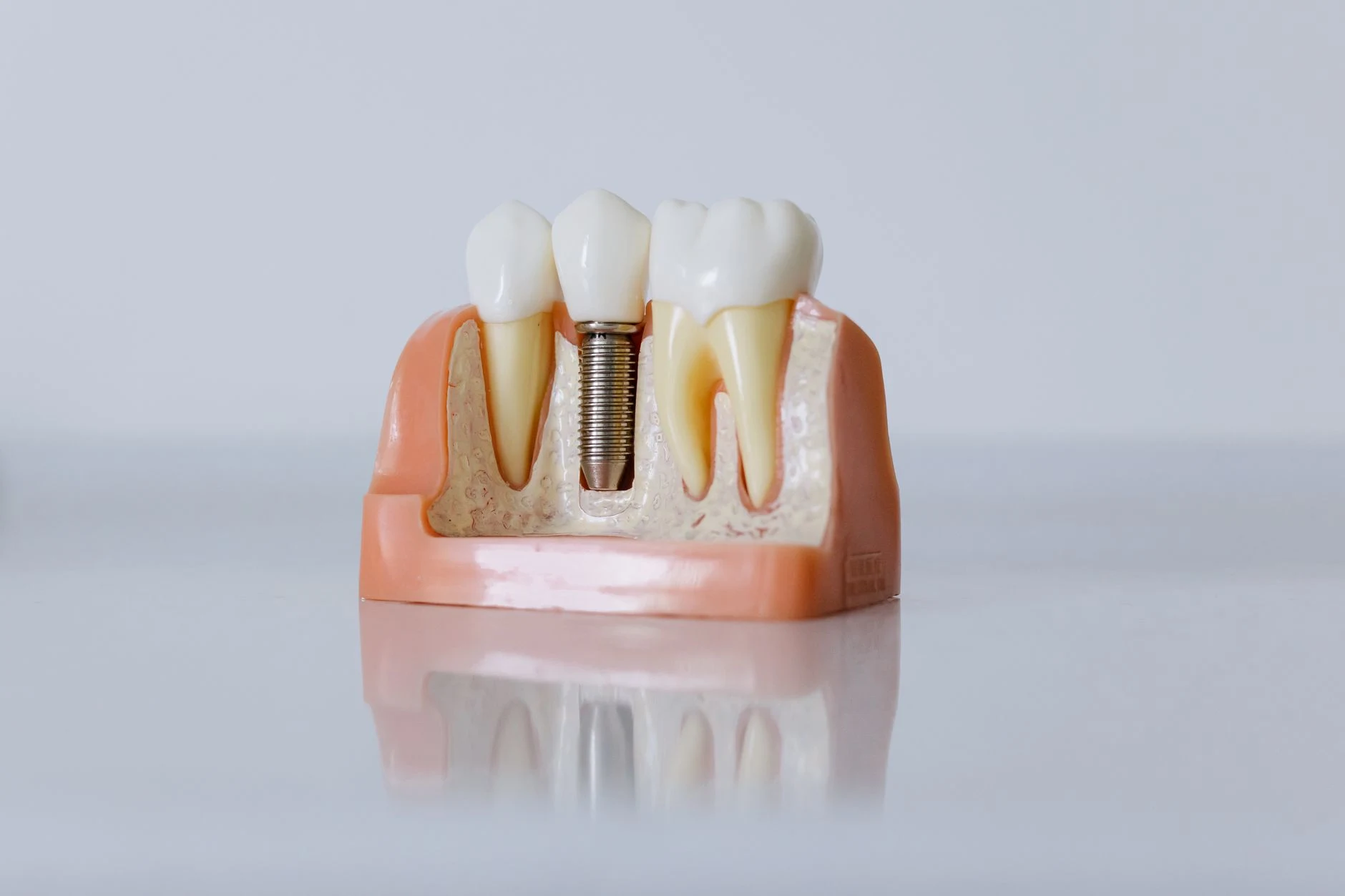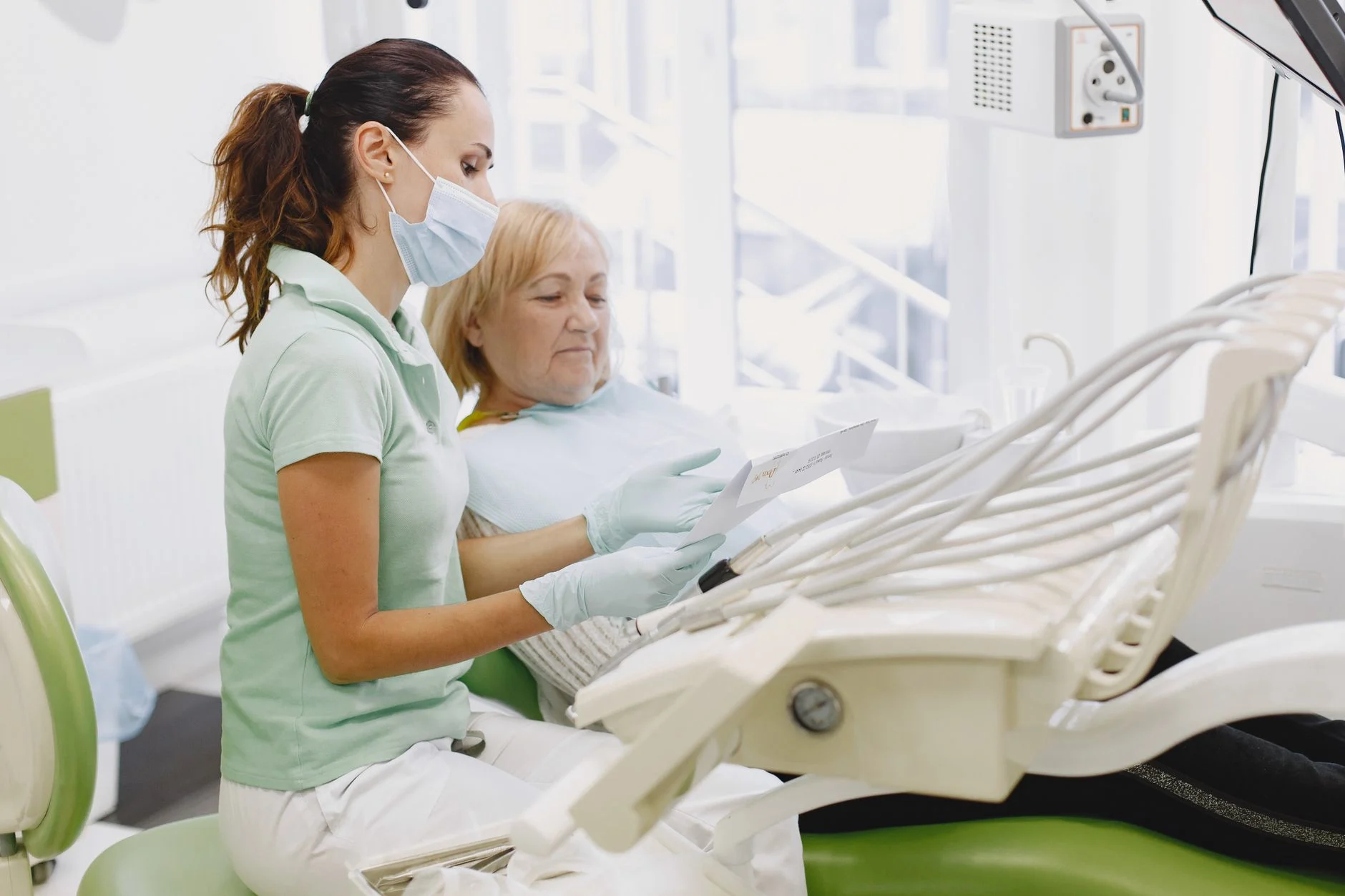
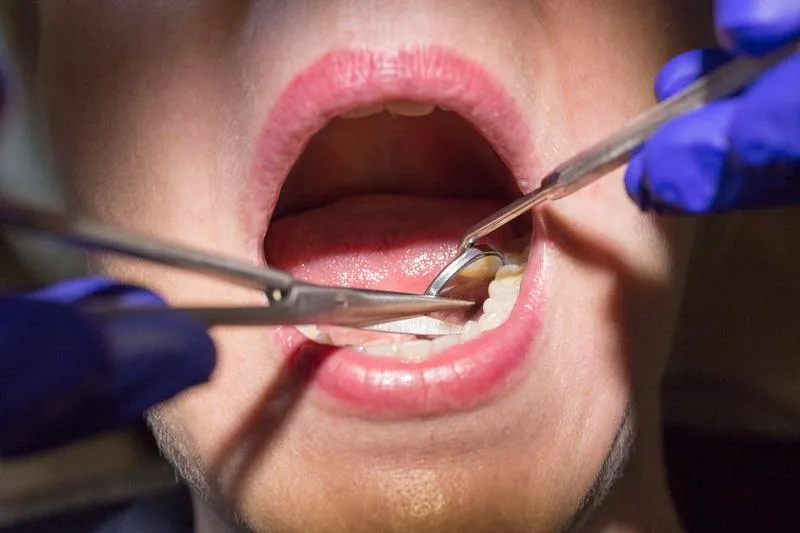
After an implant is placed, the gum is closed with stitches that hold the edges of the wound together until the tissue recovers. Removing the stitches after a dental implant is a short post-operative stage, carried out at the check-up set by the doctor.
The exact timing depends on the type of thread, the extent of the procedure and the appearance of the gum. If you have had surgery recently, it is useful to know what is checked at this appointment, what sensations may occur and how to care for the area after the stitches are removed.
What removing stitches after a dental implant involves
AI-generated image
Removing the stitches is a routine stage after a dental implant. The procedure takes place during the healing period after the implant has been placed, while the implant is going through the process of osseointegration. It does not involve a drill or an incision, but the use of fine scissors and tweezers.
The stitches keep the gum positioned over the operated area and protect the wound from food debris. They help the edges of the gum heal correctly. The general time frames are approximate, and your doctor sets the date of the check-up according to how you are progressing.
The types of sutures used in oral surgery
Source: omnia dental
Sutures differ in how they behave in the tissue. Some are gradually absorbed, while others remain intact until the doctor removes them. The type chosen influences when the post-operative check-up is scheduled.
Absorbable stitches and how they break down over time
Absorbable stitches gradually lose their strength and break down in the mouth. The rate depends on the material chosen, on saliva and on the position of the wound. The doctor will tell you whether the thread used in your case should be left to dissolve.
Oral hygiene and the movement of the tissues influence how the thread behaves. For example, a stitch in the molar area may be rubbed more often by the tongue and cheek. This can cause the thread to loosen before the gum is completely stable.
The check-up is still useful when you have absorbable stitches. Sometimes small fragments remain caught in the gum and can trap bacterial plaque. The doctor can remove them easily at the clinic.
Non-absorbable stitches and why they are removed manually
Non-absorbable stitches can be made of synthetic materials, such as nylon or polypropylene. They keep their shape and support the gum during the healing period. The doctor may prefer them when the operated area needs additional stability.
Non-absorbable stitches do not disappear on their own. For these you need a short appointment at the clinic. You can also read about the stages of a dental implant to understand where the post-operative check-up fits into the complete treatment plan.
How the doctor chooses the right type of thread for the case
The type of thread is chosen according to the procedure carried out and how the gum needs to be supported. For a small area, the doctor may use a fine suture. A more extensive area may require a material with greater stability.
The operated area and the tension in the gum matter just as much. If the treatment includes a bone graft or a sinus lift, the gum must also protect the graft material. In these situations, the doctor adapts both the thread and the timing of the check-up.
When stitches are removed after a dental implant
Source: rowlettdental
After an implant without additional procedures, the stitches are removed at the post-operative check-up, when the edges of the gum have joined and are stable. The doctor checks how the wound is progressing before deciding to remove them. The date varies depending on healing and the particular features of the procedure.
Removing them too early can leave the gum without sufficient support. Keeping the stitches in for too long encourages the build-up of bacterial plaque and local irritation. Stick to the date you were given after the procedure and let the doctor know if the stitch changes before the check-up.
The standard interval after a simple implant placement
After a simple implant placement, the stitches are usually removed after seven to ten days. This interval allows the gum to close and become stable, with a lower risk of the wound edges opening. The final date is set only after a direct examination of the area.
- The incision has closed along its entire length.
- The gum looks calm, without marked swelling.
- There is no discharge or other local signs of infection.
- The stitch is stable and no portions are caught in the tissue.
Situations that require the stitches to stay in for two or three weeks
In the case of a bone graft, a sinus lift or an extensive flap, the stitches may stay in for approximately two or three weeks. The gum must protect the area where more extensive work was done. The doctor sets the right time frame to avoid the wound opening prematurely.
Keeping the stitches in for longer does not automatically indicate a problem. It may be necessary when the soft tissue recovers more slowly or when the procedure had several stages. The instructions given at the clinic take priority over any general guideline.
What influences the date set by the doctor
Your general health can influence how quickly the gum heals. Uncontrolled diabetes, treatments that affect immunity or other conditions may require careful monitoring. These aspects are discussed before treatment, along with the cases covered by the rule of when a dental implant cannot be placed.
Smoking and oral hygiene during the post-operative period are factors taken into account at the check-up. The doctor relies above all on the actual appearance of the gum. For a broader picture of the treatment, you can also read how long a dental implant takes.
How stitch removal is carried out at the clinic
Source: freepik
Removing the stitches is a quick procedure, and the whole appointment usually takes a few minutes, including checking the operated area. The doctor does not use a drill and does not make a new incision. After the check-up, you receive recommendations adapted to how your gum has healed.
- The doctor examines the wound and checks that the gum has closed.
- The area is cleaned gently so that the stitch is visible.
- The stitch is gently held with fine tweezers.
- The doctor cuts the stitch below the knot with special scissors.
- The stitch is pulled out with a short, controlled movement.
- The area is checked, and then you receive instructions for care at home.
Anaesthesia is not usually necessary. If the gum is sensitive or the stitch has become caught superficially in the tissue, the doctor may apply a topical anaesthetic gel. This reduces discomfort on the surface of the mucosa.
What sensations occur while the stitches are being removed
While the stitches are being removed, you may feel a slight, brief tugging. The procedure is usually easier to tolerate than the procedure in which the implant was placed. Tell the doctor straight away if the area is sensitive.
After removal, small traces of blood may appear where the stitch passed through the gum. Local tenderness may persist for a short time. If the discomfort is greater than you expected, the doctor can check the area again before you leave.
What risks arise if the stitches stay in too long or come out early
Source: freepik
Stitches left in too long can trap food debris and bacterial plaque. Brushing does not always completely clean the surface of the thread, especially in the operated area. Over time, the gum can become irritated and the healing of the soft tissue can progress more slowly.
Inflamed gums can become red and sensitive and may bleed when touched. Sometimes the tissue can partially grow over the stitch, which makes removal more difficult. You will find more information about safety in the article can you die from a dental implant.
If a stitch breaks, comes loose or falls out on its own, stay calm and contact the clinic. Do not try to repair or remove the stitch at home.
- First step: do not pull on the stitch and do not touch the area with your fingernail or tweezers.
- Then: keep up the recommended hygiene and rinse gently, without vigorous movements.
- After that: let the clinic know and explain what you have noticed.
- As instructed by the doctor: go for a check-up so the wound can be examined.
Caring for the gum in the days after the stitches are removed
Source:forestray.dentist
The gum continues to heal after the stitches are removed. The tissue gradually remodels, while the implant begins the process of integrating into the bone. Following the instructions you received at the check-up helps protect the operated area.
It is normal for the area to remain slightly tender for a while. The gum must be protected from trauma and from the build-up of bacterial plaque. Gentle brushing and a careful diet are helpful at this stage.
Correct oral hygiene in the operated area
Brush your teeth as normal in the rest of your mouth, and gently near the operated area, with a soft brush. Use short movements and avoid pressing directly on the sensitive gum. Do not avoid the area completely, because bacterial plaque can build up there.
Antiseptic rinses or saline solution should be used exactly as the doctor instructed. Avoid touching the gum with your tongue, fingers or sharp objects. If you notice food debris in the area, do not try to remove it forcefully.
What to eat and what to avoid until healing is complete
After the stitches are removed, choose soft foods served at a moderate temperature. Yoghurt, mash, soft eggs, well-cooked pasta and fish are options that put less strain on the area. Chew on the opposite side if the gum is still sensitive.
Seeds and hard crumbs can get stuck next to the healing gum. Return gradually to your usual diet when chewing no longer causes discomfort and after the doctor confirms good progress at the check-up.
Habits that slow down healing
Smoking can affect blood circulation in the gum and encourage local complications. Alcohol can irritate the mucosa and interfere with some treatments prescribed after the procedure. Follow the doctor’s recommendation on avoiding these habits.
Strenuous physical exertion and exposure to intense heat can encourage local tenderness or bleeding. Postpone demanding activities until the doctor gives the go-ahead. Chewing on the operated side is resumed gradually, as the area becomes comfortable.
Signs that healing is going well and when to call the doctor
Photo source: freepik
A gum that is healing normally looks calm, and the tenderness decreases gradually. The tissue may remodel in the first few weeks, without this indicating a problem. Scheduled check-ups allow the doctor to monitor both the gum and the integration of the implant.
Contact the clinic before your next appointment if you notice signs that are getting worse instead of better.
- The pain becomes stronger after initially decreasing.
- The swelling persists or increases visibly.
- Discharge, an unpleasant smell or an unusual taste appears in the operated area.
- The bleeding does not stop after applying a clean compress.
- A fever or a general feeling of being unwell appears after the procedure.
The gum protects the implant during the period when it is becoming fixed in the bone. The next step is the check-up set by the doctor before the prosthetic restoration is fitted, that is, the crown fixed on the implant. Do not put off a check-up if the appearance of the area changes or if you have any questions.