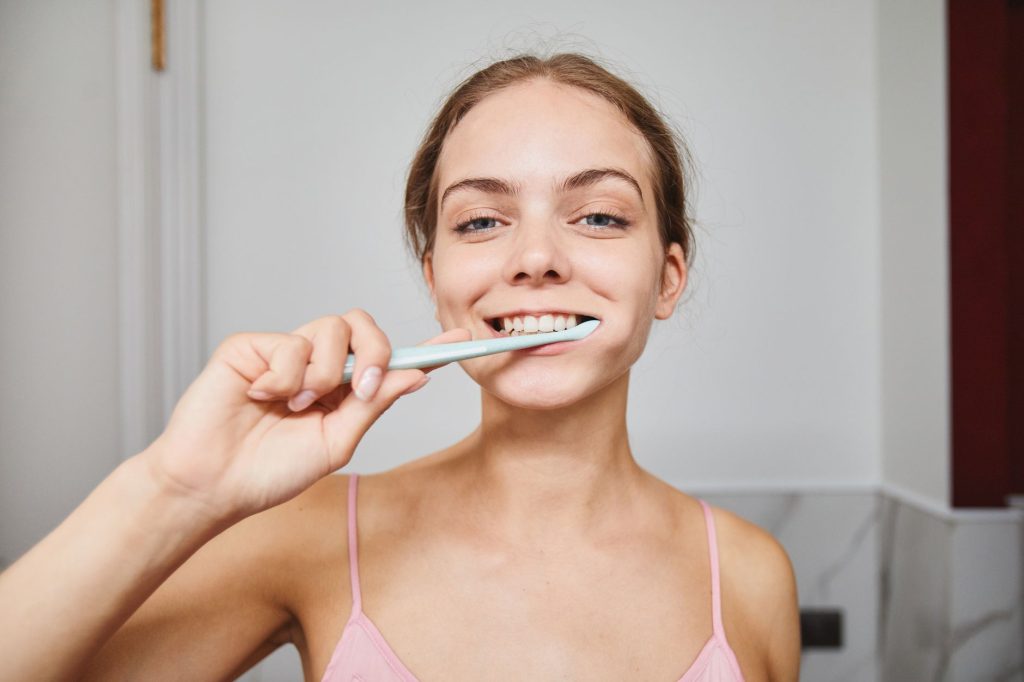
- Brushing with ordinary toothpaste and plain water, without swallowing the toothpaste, is acceptable before routine fasting blood tests.
- The amount of substances absorbed through the lining of the mouth during brushing is too small to change blood glucose or the lipid profile.
- Throat swabs, saliva tests, the Helicobacter pylori breath test and sputum collection require you to avoid toothpaste and mouthwash before the sample is taken.
- Occasional gum bleeding when brushing does not affect a venous blood draw, but repeated bleeding warrants a periodontal consultation.
- When the instructions for a special test are not clear, ask the laboratory how long before the test you should stop brushing and whether complete fasting is required.
Contents
- H2: What fasting sample collection actually means and where tooth brushing fits in
- H2: What doctors say about morning tooth brushing before sample collection
- H2: What toothpastes and mouthwashes contain and why it matters before tests
- H2: The tests for which morning brushing really should be avoided
- H2: Gums that bleed when brushing before sample collection
- H2: The other morning rules, from water to coffee and cigarettes
- H2: How to handle your child’s oral hygiene before tests
- H2: What to do before a dental consultation or procedure
- H2: What to remember before the morning of your test
The morning of a blood test almost always comes with the same last-minute question. Brushing your teeth before tests remains one of the most common uncertainties for patients who arrive at the laboratory on an empty stomach, especially when time is short and every step counts. The fasting required before routine blood tests means no food or calorie-containing drinks for 8 to 12 hours, according to Clinica Sante. Morning tooth brushing, however, does not automatically fall into the same category as a snack or a coffee, because it provides no real calorie intake. The rules differ from one test to another, and a few simple clarifications explain where the general rule applies and where morning oral hygiene should be postponed.
What fasting sample collection actually means and where tooth brushing fits in
Fasting sample collection means that, for 8 to 12 hours before the blood sample, the patient consumes no food and no drinks containing calories, according to the recommendations of Clinica Sante. The aim is for the results for blood glucose, lipid profile or other metabolic parameters to reflect the real state of the body, without the influence of a recent meal. Because of this long fast, you arrive in the morning unsure about anything that touches your mouth, from a sip of water to your usual brushing.
The essential difference lies in quantity and contact time. A meal provides tens or hundreds of calories, which reach the bloodstream and influence blood glucose or triglycerides for hours. A few minutes of brushing, with toothpaste that is not swallowed, provides no comparable calorie intake, and most of the substances remain on the surface of the teeth and in the rinsing water, not in the body. You may feel unsure about morning brushing precisely because you instinctively take the fasting rule designed for food and drink and apply it to your routine oral hygiene as well. The 8 to 12-hour fasting rule applies to routine blood tests, not to all medical investigations, and for some samples taken directly from the mouth you will find specific rules, discussed below.
What doctors say about morning tooth brushing before sample collection
Brushing with ordinary toothpaste and plain water is acceptable before routine blood tests, as long as the toothpaste is not swallowed. This is the answer most doctors give to patients worried that brushing in the morning will alter their results. The amount of substances absorbed through the lining of the mouth during a few minutes of brushing is so small that it does not change blood glucose, the lipid profile or other parameters routinely monitored. The body does not receive a calorie or sugar intake comparable to a meal, even if the toothpaste contains sweeteners.
The practical recommendation is simple. After brushing, rinse your mouth well with water and spit everything out, without leaving traces of toothpaste on the roof of your mouth or under your tongue. If you accidentally swallowed a small amount of toothpaste, there is no reason to worry as far as routine blood tests are concerned. Only if your sample is taken directly from the mouth or from respiratory secretions can even traces of toothpaste influence the result, as the following sections show.
What toothpastes and mouthwashes contain and why it matters before tests
Toothpastes often contain sweeteners such as sorbitol or xylitol, which give a pleasant taste without actual sugar. These affect blood glucose only if swallowed in quantity, which does not happen with ordinary brushing followed by rinsing and spitting. Fluoride, present in concentrations of 1000 to 1500 ppm in ordinary toothpastes, according to American Dental Association standards, and the abrasive substances in toothpaste have no influence on routine blood tests, regardless of the amount used for brushing.
Mouthwash raises a slightly different issue, because it is used in larger volumes and is easier to swallow accidentally than toothpaste. Some antiseptic mouthwashes contain alcohol in significant concentrations, for example 21.6% in Listerine Cool Mint Antiseptic, according to the FDA-approved label. This concentration matters especially before tests that assess liver function, where even a small amount of swallowed alcohol can raise questions about the result. For this reason, mouthwash is best avoided or used with great care on the morning of a test, even though ordinary toothpaste remains acceptable. Thorough morning brushing, like professional scaling and cleaning done regularly at the dental practice, has nothing to do with preparing for tests, only with the health of your teeth and gums.
The tests for which morning brushing really should be avoided
The general rule described above applies to routine blood tests taken by venous blood draw. There are, however, a few investigations for which morning oral hygiene can directly influence the result, because the sample is taken from the mouth itself, from the throat or from the airways. For these, tooth brushing, mouthwash and even chewing gum should be postponed until after the sample has been taken.
- Throat swabs and cultures from the mouth
- Saliva tests and genetic tests using a mouth sample
- The Helicobacter pylori breath test
- Morning sputum collection
Throat swabs and cultures from the mouth
Before a throat swab is taken, the patient should have fasted, with no liquids and no tooth brushing or oral antiseptics, according to the recommendations of Clinica Sante. Toothpaste and mouthwash temporarily reduce the bacterial flora in the throat and mouth, and this can produce a false negative result, even if an infection is present. The general recommendation is to avoid any form of oral hygiene for a few hours before the sample. The exact interval is set by the laboratory or practice taking the sample, as the Merck Manual also notes for throat sampling procedures.
Saliva tests and genetic tests using a mouth sample
Saliva tests and genetic tests taken with a cheek swab require at least 30 minutes without food, drink, smoking or tooth brushing before collection, according to CD Genomics. Any trace of toothpaste or mouthwash left on the lining of the mouth can contaminate the sample and affect the quality of the genetic material collected. Each collection kit usually comes with its own preparation instructions, and these should be checked and followed exactly, because the interval can vary from one test to another.
The Helicobacter pylori breath test
The Helicobacter pylori breath test requires the patient not to eat or drink for at least one hour before the test, according to Labcorp. Toothpaste and antiseptic mouthwashes should be avoided during this interval. Antibacterial substances can influence the activity of the bacterium both in the mouth and in the stomach, which can distort the test result. In addition, antibiotics, proton pump inhibitors and bismuth preparations must be stopped at least two weeks before the test, also according to Labcorp. The instructions you receive from the laboratory regarding the exact abstinence interval always take precedence.
Morning sputum collection
For morning sputum collection, the standard instruction recommends brushing your teeth followed by rinsing your mouth with plain water only, without mouthwash, before coughing up the sample, according to the Kansas Department of Health and Environment. The order matters, because mouthwash and the antibacterial substances in some oral hygiene products can contaminate the sample and reduce the chances of identifying the infectious agent being sought. The simple step of a final rinse with clean water makes the difference between a usable sample and one that has to be repeated.
Gums that bleed when brushing before sample collection
If your gums bleed while brushing just before a sample is taken from your mouth, the simplest thing is to rinse well with water and wait a few minutes until the bleeding stops, then go ahead with the collection. Blood in the mouth can interfere with some oral samples, such as throat swabs or saliva tests, but it does not influence the result of an ordinary venous blood draw, because the blood sample is taken directly from the vein, not from the mouth.
If your gums bleed occasionally when brushing, the cause may be a toothbrush that is too hard or overly vigorous brushing. If, however, you notice bleeding almost every morning, this is not normal and usually indicates gingivitis or early periodontitis. The cause is worth investigating with a periodontal consultation, which can determine whether professional scaling is needed to remove tartar from the gum line. You can read more about this topic in the article on why gums bleed frequently. If you leave chronic gum inflammation untreated, you risk slightly raised levels of inflammatory markers in your blood, one more reason why gum health deserves attention beyond the morning of your test.
The other morning rules, from water to coffee and cigarettes
The fast before blood tests allows plain water, which is actually recommended to make the blood draw easier and to maintain normal hydration. Coffee, tea and chewing gum break the fast, even when they contain no sugar, because they trigger a digestive response and can influence certain metabolic parameters. Smoking before sample collection can temporarily change values such as blood glucose or inflammatory markers, which is why most laboratories recommend avoiding it on the morning of the test. Intense physical exercise and alcohol consumption the evening or day before the test can also influence the results, from muscle enzymes to triglycerides.
The recommended time for sample collection is early morning, usually between 07:00 and 11:00, according to Clinica Sante, because most reference values were established for this interval. The 8 to 12-hour fast is most naturally counted from your last evening meal.
How to handle your child’s oral hygiene before tests
Children swallow toothpaste much more easily than adults, especially young children who do not yet have full control of their swallowing reflex. On the morning of a blood test, the simplest solution is to brush with water only and an ordinary toothbrush, without toothpaste, which eliminates any risk related to swallowed sweeteners or fluoride.
Explaining fasting to a child works better with a short, concrete reason, such as the fact that the doctor needs their blood to be exactly as it usually is, without any traces of breakfast. Booking the test as early in the morning as possible shortens the time the child has to go without food. If your child’s gums often bleed when brushing or seem sensitive, it is worth booking a paediatric dental consultation, especially as the health of the permanent teeth depends directly on what baby teeth are and how they should be cared for.
What to do before a dental consultation or procedure
Unlike the oral samples discussed above, brushing your teeth before a dental consultation and treatment plan is recommended, not something to avoid. A clean mouth helps the dentist examine your teeth and gums more easily, without food debris that can hide early decay or inflamed areas.
Before local anaesthesia, the recommendation is not to come on an empty stomach, unlike for blood tests. A light meal eaten a few hours beforehand reduces the risk of dizziness or feeling unwell during the procedure. Any relevant recent test results and any anticoagulant treatment should be shared with your dentist, because they influence decisions about extractions or other surgical procedures.
A dental X-ray taken at the same clinic, without having to travel to another radiology practice, shortens the time to a diagnosis and a treatment plan. Book a dental consultation and transform your smile by choosing a clinic where the investigation and the discussion with the dentist take place in the same visit.
What to remember before the morning of your test
For most routine blood tests, morning brushing with ordinary toothpaste and plain water remains acceptable, provided you rinse your mouth well and spit everything out. The exceptions are samples taken directly from the mouth, throat or airways, where even traces of toothpaste or mouthwash can alter the result.
The simple deciding criterion is where the sample comes from. If it is taken from a vein, ordinary oral hygiene poses no problems. If the sample comes from the mouth itself, the throat or sputum, toothpaste and mouthwash should wait until after collection. When the instructions for a special test are not clear, it is worth calling the laboratory. Ask specifically how long beforehand you should stop brushing and whether mouthwash is allowed that morning. Also check whether the test requires complete fasting or just skipping oral hygiene. And if brushing causes frequent bleeding or gum sensitivity, a dental check-up remains the natural next step.
Sources:
- Clinica Sante – Sample collection guide
- American Dental Association – Fluoride: Topical and Systemic Supplements
- DailyMed (FDA) – Listerine Cool Mint Antiseptic Label
- Merck Manual Professional Edition – How To Swab a Throat for Testing
- CD Genomics – Buccal Swab Collection Instructions
- Labcorp – Helicobacter pylori Urea Breath Test
- Kansas Department of Health and Environment – Patient Instructions for Sputum Collection