Have you found out that you need an implant and suddenly found yourself facing a list of terms that nobody has explained to you clearly? There are several types of dental implants, and names such as endosteal, zygomatic, pterygoid or subperiosteal sound complicated and leave you feeling that you have to choose something on your own that you don’t even fully understand. It is natural to feel confused, especially when every source seems to say something different and all you want is a fixed tooth back in place and a decision you can trust.
This is where the real problem lies: there is no single answer that works for everyone, because the bone, the location of the missing tooth and your state of health differ from patient to patient. This article explains in plain terms the main options available, the situation in which each is used and how the right choice is reached, without turning you into a specialist overnight.
Why there is no single type of dental implant that suits everyone
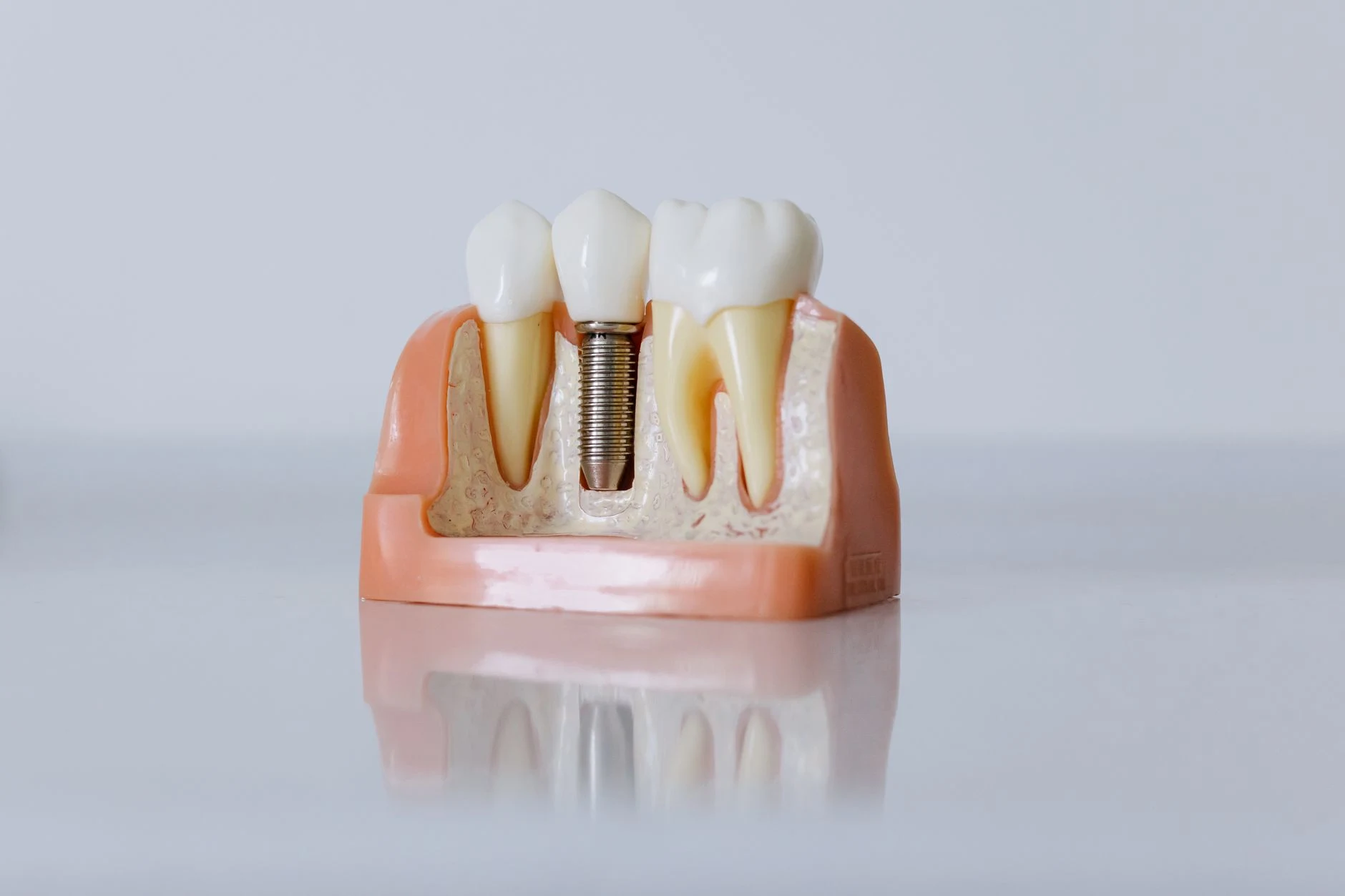
Photo source: pexels.com
Many patients start from the idea that an implant is an implant, regardless of the practice or the situation. In reality, the choice depends on three very concrete things: how much bone you have in the area where the tooth is missing, exactly where that tooth is located and how your general health is. Thin bone at the back of the upper jaw raises different problems from a gap at the front, in the area visible when you smile.
That is precisely why the decision is not yours alone, however well you research it. You come with the need and the expectations, but the type of implant is determined on the basis of data that only the dentist can read. This does not take you out of the equation; it changes your role: you understand the options, ask good questions and make an informed choice together with the specialist.
The real first step is not on the internet, but at a 3D assessment. The scan shows you in detail the volume and density of the bone and the position of the nerves and sinuses, exactly the information without which any recommendation would be guesswork. At the Dr. Radu Dumitru Clinic, this 3D analysis is the basis of every implant treatment plan.
The main types of dental implants
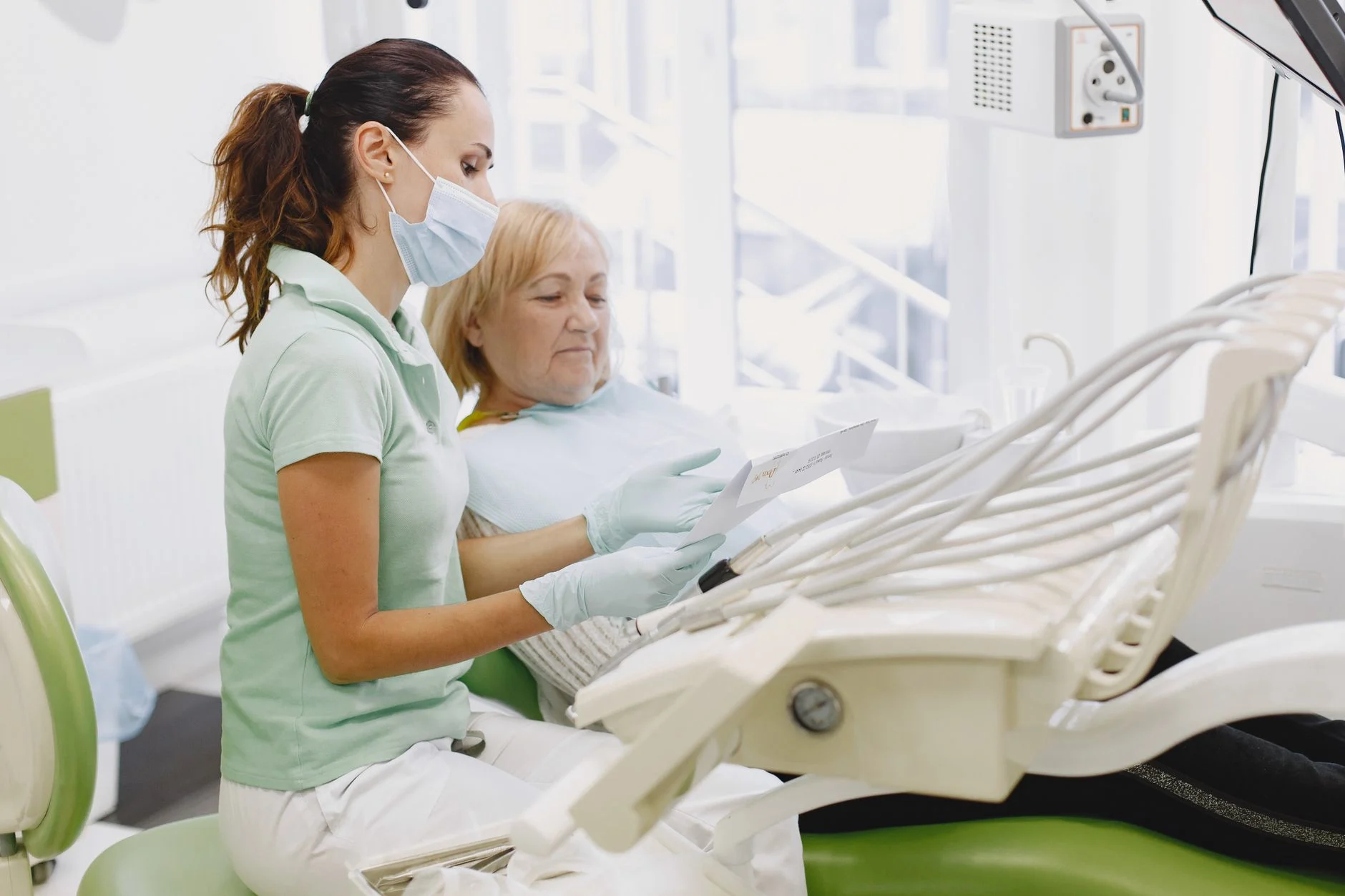
Photo source: unsplash
When we talk about types of dental implants, we are talking first and foremost about where the artificial root is anchored and the clinical situation each model was designed for. The most frequently used remains the endosteal implant, the classic option, but there are also special solutions for cases where the bone is no longer sufficient. Before going into detail, the table below gives you an overview of each type of dental implant and its main indication.
Remember one important thing before going further: the alternative options are not compromise solutions, but answers for special anatomies. If you have sufficient bone, you will most likely receive a classic implant. If not, being offered a zygomatic or pterygoid implant means that there is a way forward even where, in the past, you would have been told it was not possible. You can find out more about each solution on the dedicated dental implant page of the website.
The endosteal implant, the most frequently chosen
The endosteal implant is the titanium screw that is fixed directly into the bone of the upper jaw or the lower jaw, where the root of the natural tooth once was. It is called endosteal because it sits inside the bone, and the visible crown is later fitted on top of it. It is the gold standard in implantology precisely because it most faithfully imitates the way a natural tooth is supported in the bone.
This option is right for you if you have a sufficient volume of healthy bone in the area of the missing tooth and good general health, without uncontrolled conditions. These are the conditions found in most adult patients, which is why the endosteal implant covers most cases in everyday practice.
The quality of the screw matters more than you might think, because it determines how well it integrates into the bone and how long it lasts. That is why globally certified brands are used, such as the Neodent implant and the Straumann implant, chosen for the biocompatibility of their titanium and the clinical documentation behind them.
Zygomatic implants, a solution when the upper jawbone is insufficient
Zygomatic implants are not anchored in the upper jaw, but in the zygomatic bone, that is, the cheekbones, a dense bone that remains stable even when the upper jaw has resorbed severely. In practice, the anchorage moves to an area that can support your fixed teeth where the upper jaw alone no longer has anything to offer.
The main indication is severe bone loss in the upper jaw, a situation in which a classic implant would be impossible without extensive bone grafts and very long treatment. Compared with the endosteal option, the zygomatic screw is considerably longer and is inserted at a different angle, calculated in advance on the 3D images. For you as a patient, the practical difference also concerns the treatment journey: because the anchorage is in dense, stable bone, temporary teeth can often be fitted shortly after the procedure, without the months of waiting required by a graft. Recovery brings somewhat more pronounced discomfort and swelling in the first few days than a simple endosteal implant, because the procedure is more extensive, but the final result you are aiming for remains the same: a fixed, functional arch where the upper jaw no longer offered support.
The idea itself need not frighten you. This is a standardised procedure, not an experiment, and the clinical data are reassuring: a meta-analysis of 1,895 implants showed a failure rate of only 0.69% for zygomatic implants, according to Gutiérrez Muñoz et al., Biology (Basel) 2021. What matters is that it is planned and carried out correctly.
Pterygoid and angled implants as alternatives for complex cases
The pterygoid implant is anchored in the pterygoid bone, located at the back of the upper jaw, beyond the last molars. It is useful when there is no longer enough bone in the posterior area for an ordinary implant, but you need support exactly there, in the area where you actually chew. In this way a complicated graft in this hard-to-reach region can sometimes be avoided, and for you this can mean a shorter path to fixed teeth, with a recovery close to that of an ordinary implant.
The angled implant is not a separate type of screw, but a technique in which the implant is inserted at an incline, at a pre-planned angle, instead of being placed strictly vertically. This approach avoids areas with reduced bone or structures that the dentist must protect, such as the nerves or the sinus. Both solutions are legitimate clinical options, not improvisations of the moment, and are always based on 3D imaging planning carried out before any procedure.
When and why the subperiosteal implant is rarely used today
The subperiosteal implant sits under the gum, on the surface of the bone, without penetrating inside it, beneath the layer called the periosteum. It was designed for patients with extremely reduced bone, in whom nothing could be anchored deeply, and for a long time it was the last available option.
Today it is rarely chosen, because modern bone augmentation techniques and zygomatic implants offer more predictable results in the same difficult situations. It remains part of the history of implantology and a theoretical option, but for most cases with little bone there are now safer and more comfortable solutions.
The type of implant is not the same thing as the implant brand
Many patients confuse the type of implant with its brand, but they are two different things. The type of implant describes how and where it is inserted into the bone (endosteal, zygomatic, pterygoid etc.), while the brand is the manufacturer of the implant system used by the dentist.
There are internationally recognised manufacturers, such as Straumann, Neodent, Nobel Biocare, MegaGen, Bredent or Zimmer Biomet, each with its own technologies, osseointegration surfaces and clinical studies. Choosing a particular brand does not automatically mean that it is better for every patient, but that the dentist selects it according to their experience, the clinical situation and the treatment plan.
For you, the most important thing is that the recommended implant is backed by solid clinical studies, comes from an established manufacturer and is chosen following a complete assessment, not just because you heard its name in an advert or on the internet.
How the dentist decides which type of implant is right
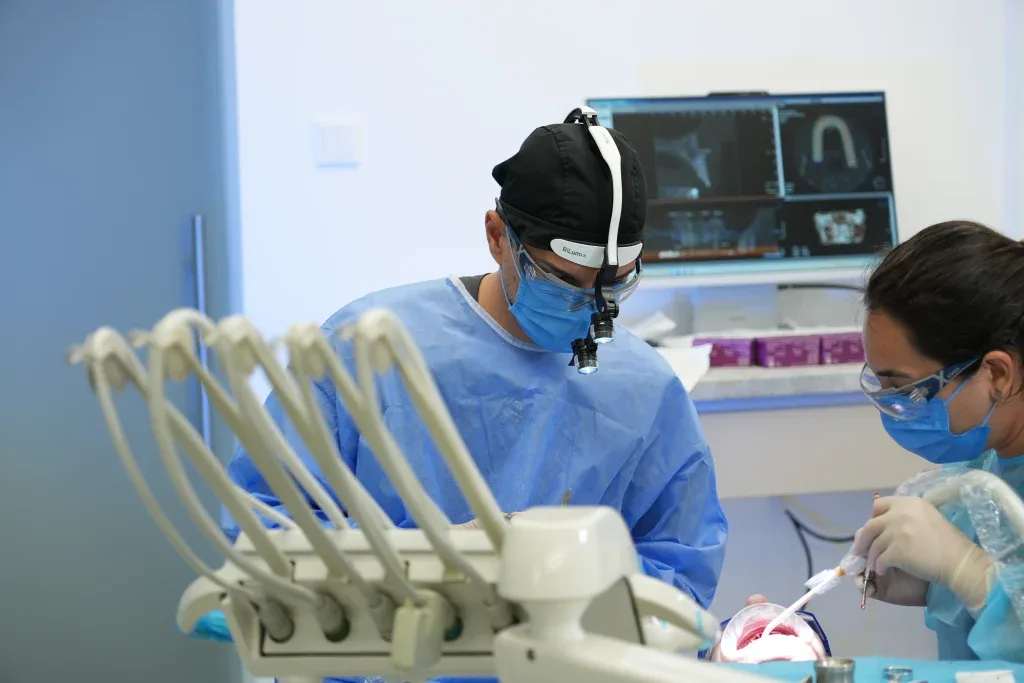
Photo source: pexels.com
The decision starts with a clinical consultation, where the dentist examines your gums, the neighbouring teeth and the way your bite closes. Next comes the step that carries the most weight, the 3D CBCT imaging examination, a scan that reconstructs the bone in three dimensions and shows exactly how much bone you have, how dense it is and where the nerves and sinuses are located.
On the basis of these images, the dentist sees whether a classic endosteal implant fits safely or whether the situation calls for a different option, placed in another bone or at another angle. This is also where the precise position of each implant is planned, so that the final crown looks and functions naturally. For full-arch rehabilitations, the 3D assessment also helps in choosing a protocol such as All on 4 and All on 6 when several teeth are missing.
Added to all this is your general state of health. Conditions such as diabetes, osteoporosis or a smoking habit influence the way the bone heals around the implant and can tip the balance towards a particular type of solution. The natural conclusion is that the final decision rests with the dentist, based on clinical data and images, not on the patient’s preference for a name heard somewhere. Your role is to provide a complete medical history and to ask questions.
When a bone graft is needed before an implant
Source: freepik
Some implants, especially endosteal ones, need a minimum volume of bone to sit firmly. If your bone has thinned after an extraction or after years in which the tooth was missing, the dentist may recommend a bone graft that adds material to the deficient area, or a sinus lift when the problem is at the top, towards the back. A sinus lift gently raises the membrane of the maxillary sinus and creates space for new bone where the implant would otherwise penetrate the sinus cavity.
The need for a graft is more common than many patients would imagine. A study of 1,512 implants found that approximately half of the treated sites required bone augmentation, with most cases in the front area of the upper jaw, according to Cha et al., Maxillofac Plast Reconstr Surg 2016.
What may reassure you is that these procedures have solid long-term results. A study of 382 patients reported a sinus graft success rate of 98.3% at 15 years, and implants placed in augmented sites had a survival rate of 97.2%, according to Jamcoski et al., BioMed Research International 2023. You can find details about this procedure on the sinus lift page.
Alternative types can change the equation. A zygomatic or pterygoid implant sometimes avoids the need for a graft, because it is anchored in bone that has remained stable, but this does not apply in all cases. What matters is to understand that the decision about a graft is not a random stage added along the way, but part of the surgical planning, determined from the outset, together with the choice of implant type.
The stages and recovery after choosing the type of dental implant
AI-generated image
Whatever type of implant is chosen, the course of treatment broadly follows the same steps, from the first discussion to the finished tooth. You can follow them below, so that you know what to expect once the decision has been made.
- The initial consultation and clinical examination of the area.
- Planning based on the 3D scan, determining the type and position of the implant.
- The surgical procedure to insert the implant, possibly together with a graft.
- Bone healing, the osseointegration period in which the bone fuses with the implant.
- Fitting the crown or prosthetic restoration on top of the integrated implant.
The total duration varies depending on the type of implant and on whether or not you need a bone graft. For a simple endosteal implant, with good bone and no augmentation, treatment usually takes between 3 and 6 months, from implant insertion to crown fitting. When a bone graft or a sinus lift is needed, the interval usually extends to 6-12 months, so that the new bone has time to mature before receiving the teeth. These are guideline figures, and the dentist will give you a realistic timeframe for your case only after the 3D assessment, not before.
Recovery depends a lot on you. In the first few days, mild discomfort and swelling that gradually subside are normal, and rigorous hygiene, keeping your check-ups and a few temporary dietary restrictions, especially avoiding hard foods on the operated area, all help healing. Following the post-operative protocol is not a formality, because it directly determines how well the implant integrates and how long it will last in the years to come.
What to discuss with the dentist at your implant consultation
Photo source: pexels.com
The best consultation is one in which you ask questions. Ask directly which type of implant is recommended for you and why that one in particular in your case, what the 3D scan shows about your bone and whether you will need a graft or a sinus lift beforehand. This is also the moment to find out which implant brand will be used and why it was chosen, as well as the estimated duration of the whole treatment, from the procedure to the final tooth.
A good dentist does not shy away from these questions, but clarifies them for you one by one, with a treatment plan designed for your situation, not a template that applies to anyone. Transparency in explaining the options is, in fact, one of the signs that you are in good hands.
Precisely because the right type of implant cannot be chosen correctly without an individual clinical assessment, the next logical step is not another internet search, but an appointment. At the Dr. Radu Dumitru Clinic you can have the 3D assessment and discuss, on that basis, exactly which solution suits you.
Choosing an implant should not be a hasty decision or one based on a term you happened to hear. You now know what the main options are, how they differ in practice and why your bone, the location of the missing tooth and your general health matter more than any brand name.
The technical side is up to the dentist and the 3D images that tell them what is and is not possible in your case. The most useful thing you can do for your smile is to turn this information into a good question at the practice.
Book a consultation at the Dr. Radu Dumitru Clinic, have the assessment and leave with a clear plan, not with a list of unexplained terms.