Dental implant · patients from Slatina
At the Dr. Radu Dumitru Clinic, patients from Slatina who need a dental implant benefit from a careful assessment and a personalised treatment plan for each individual case. Whether you need a single tooth replaced or a complete oral rehabilitation, we offer patients from Slatina safe, aesthetic and long-lasting solutions tailored to their clinical situation. Everything begins with a thorough consultation: X-ray, CT scan and a clearly explained plan, step by step, so that you know from the outset how many implants are needed, which prosthetic restorations are suitable and how much the whole procedure will cost. Price transparency is one of the criteria patients from Slatina value most when choosing a clinic for a dental implant, so we put it front and centre.
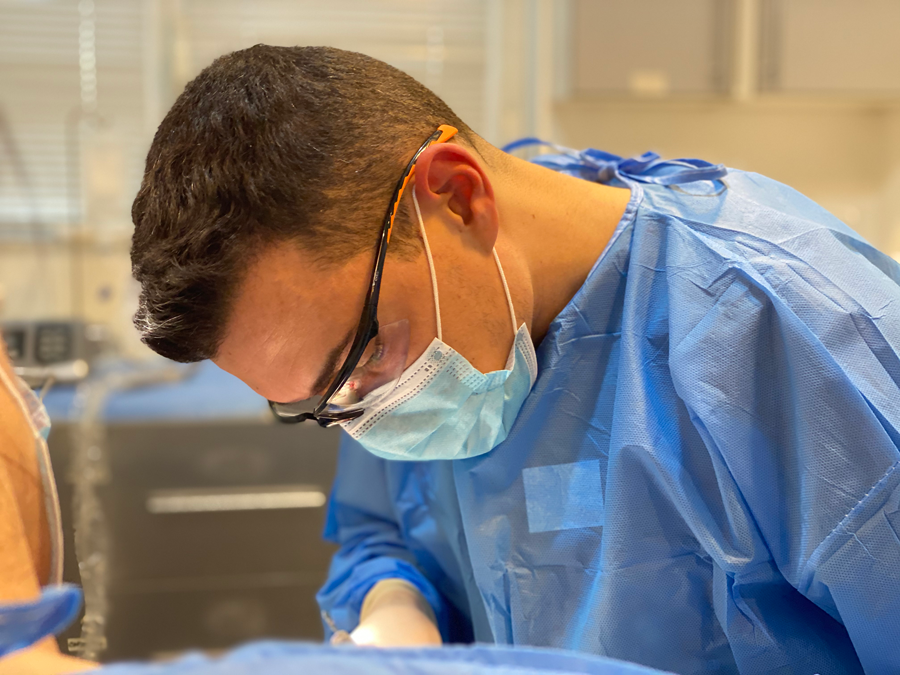
A dental implant is a solution through which a tooth that no longer exists can be replaced without the restoration necessarily relying on the neighbouring teeth. A biocompatible component, usually made of titanium, is inserted into the bone and becomes the support for the future artificial tooth.
Once the implant has integrated, the treatment is completed with the prosthetic part and the dental crown. Depending on the number of missing teeth, implants can also support bridges or restorations for an entire arch.
An implant may be an option when a tooth has been lost or must be extracted and can no longer be saved, as well as in cases where several teeth are missing. The indication depends not only on the gap left, but also on the bone, the gums and the particular features of your whole dentition.
Your dentist may recommend implant treatment:
From the first consultation to the final tooth, the treatment can be summarised in 5 main stages:
1. Initial assessment: Your teeth, gums and the area where the tooth is missing are examined, and the necessary imaging investigations are analysed.
2. Implant planning: The dentist determines the position of the implant and checks whether the existing bone allows the procedure or whether additional procedures are needed.
3. Implant placement: The implant is inserted into the bone under local anaesthesia, according to the agreed plan.
4. Healing: The implant is allowed to integrate into the bone before final loading, as indicated for the case in question.
5. Making the final tooth: After the healing stage, the crown or prosthetic restoration is made and fitted, and then your bite and its fit are checked.
To understand the role of the implant, a distinction must be made between the implant and the artificial tooth the patient sees. The implant is the part located in the bone and acts as a support; the crown is the visible part that restores the tooth.
Thus, a dental implant:
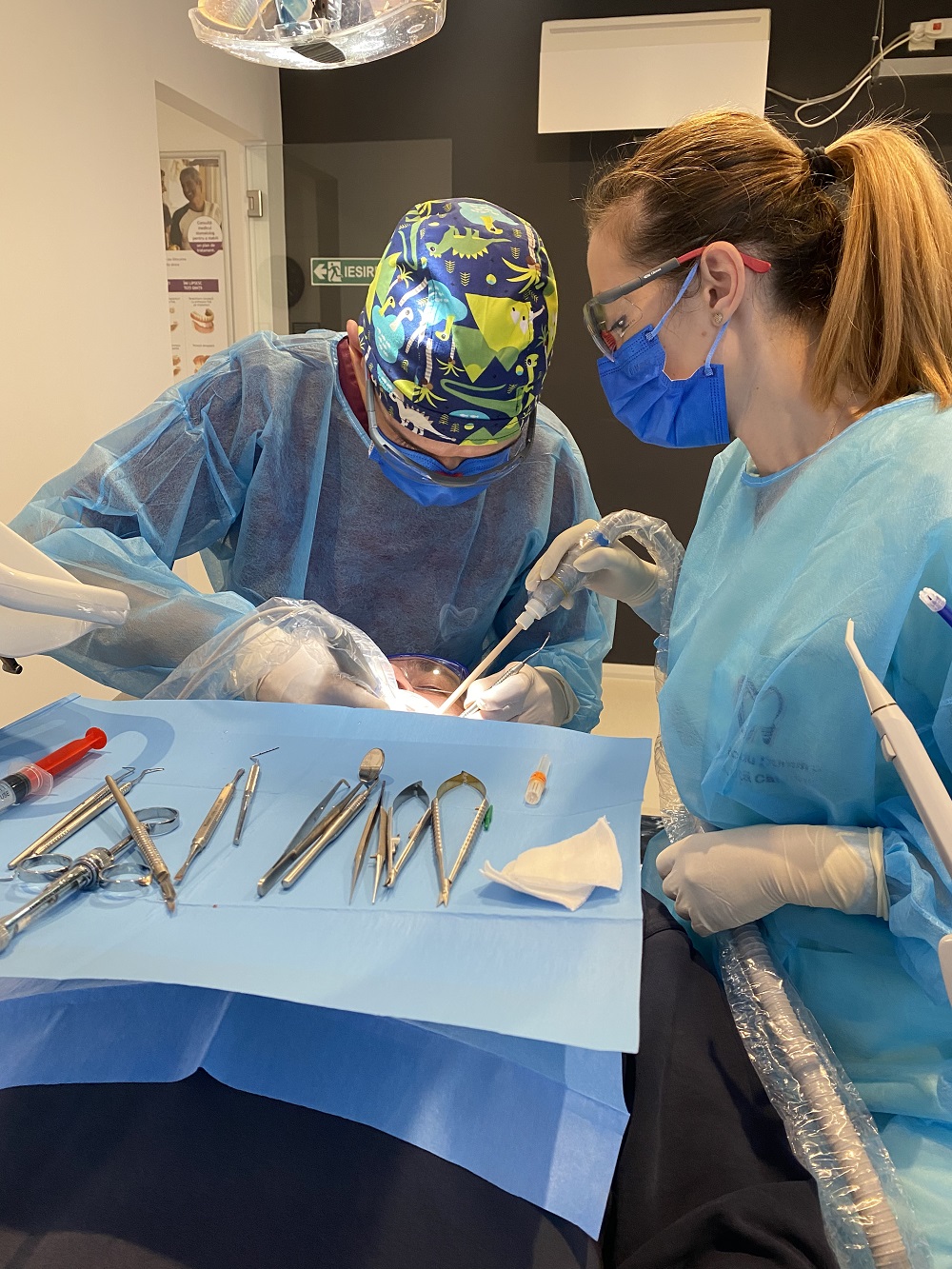
The price of a dental implant varies depending on the type of implant, the material used and the complexity of the case (the need for bone grafting, the number of implants, etc.). At the Dr. Radu Dumitru Clinic, patients from Slatina receive a clear treatment plan from the very first consultation, with all costs detailed before the procedure begins.
Frequently asked questions
In the first few days, soft foods and avoiding the treated area are recommended. As healing progresses, you can gradually return to a normal diet, following your dentist’s instructions.
It depends on each individual case. Sometimes the implant can be fitted in the same session as the extraction (immediate implant), if the bone and gum allow it. At other times a healing period is needed, from a few weeks to a few months, so that the area is properly prepared.
Yes. Inflamed or untreated gums can compromise the long-term stability of the implant. That is why any periodontal condition must be treated before the procedure, and the health of the gums is checked at every check-up after the implant has been fitted.
No. The procedure is carried out under local anaesthesia, so you will not feel any pain during it. You may experience mild discomfort in the following days, which is easily managed with the medication recommended by your dentist.
An implant is not recommended in the case of uncontrolled conditions such as poorly controlled diabetes, severe clotting disorders or active cancer, nor during pregnancy or where oral hygiene is inadequate. Each situation is assessed individually at the consultation.
Yes. Well-controlled diabetes is not usually an obstacle. However, it is important for your blood sugar levels to be monitored constantly and for treatment to be coordinated between your dentist and your diabetes specialist.
A properly integrated and well-cared-for implant can last for decades, sometimes even a lifetime. Its longevity depends on the quality of the implant and the prosthetic restoration, as well as on your daily oral hygiene and attending regular check-ups.
In most cases local anaesthesia is used, the same as for other dental treatments. For anxious patients or more complex cases, conscious sedation may be chosen, on the dentist’s recommendation.
Implantology and surgery
Dental implants in Pitesti ▷ Turn to our services with confidence and discover how easy it is to…
Neodent implant. Fast, safe and effective treatments for a flawless smile
Straumann implant. Fast, safe and effective treatments for a flawless smile
All-on-4 or All-on-6! ▷ Turn to our services with confidence and discover how…
Fixed dental prosthesis Pitesti ▷ Turn to our services with confidence and discover how easy it is to…
Find out how the sinus lift procedure helps you get stable implants even with a bone deficit.…
We assess your situation, explain your options and give you a clear treatment plan, with the stages and costs set out from the start.