Dental implant · patients from Baicoi
What is a dental implant? When you lose a tooth, it is not only the visible gap in the arch that is left empty – the root that supported it also disappears. A dental implant is designed to replace this component and to create a support on which the new tooth can later be made. The implant is placed in the upper or lower jawbone and, once it has integrated, it can support a dental crown. When several teeth are missing, implants can also be used as support for bridges or more extensive prosthetic restorations. However, the treatment is not the same for every patient. The number of implants and the type of final restoration are determined after assessing the teeth, the gums and the bone available.
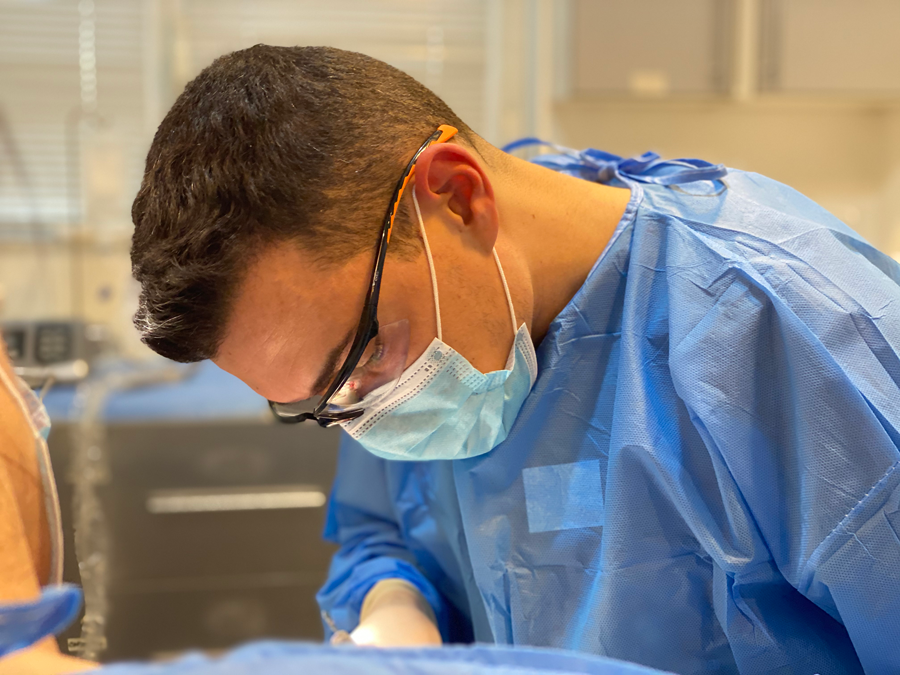
Losing a tooth does not automatically mean that an implant is the only treatment option. It is one of the options the dentist may consider after assessing the situation in your mouth and your general health.
A dental implant may be recommended in situations such as:
The decision is made individually. The quantity and quality of the bone, the health of the gums, general conditions, medication and factors such as smoking can change whether treatment is indicated and its stages.
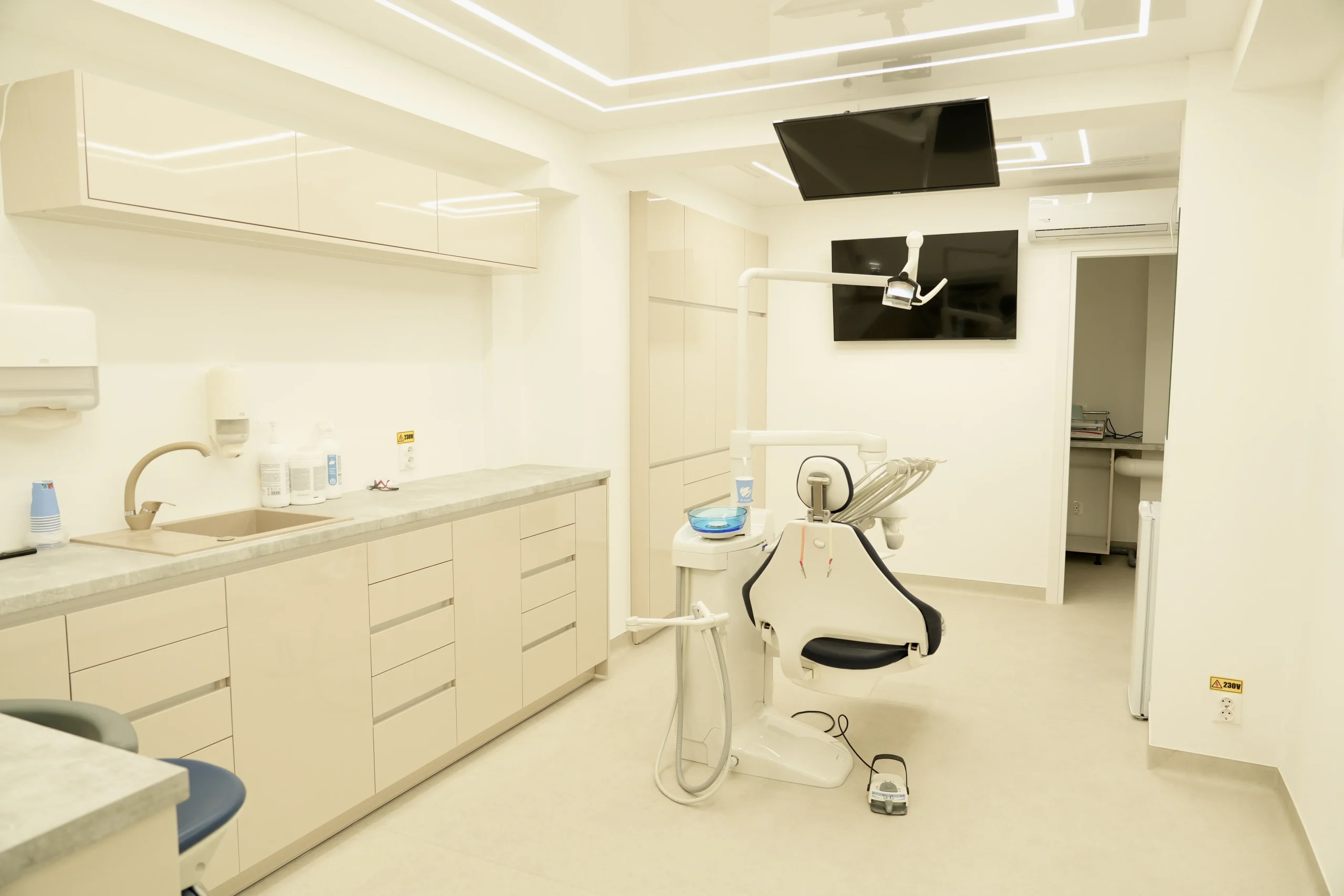
If you are coming from Băicoi for a dental implant, it helps to know that treatment does not mean a single visit to the clinic. There are several stages between the initial assessment and the fitting of the final tooth, and how long they take depends on the particular features of the case.
1. The initial assessment. The dentist checks the teeth, the gums and the area where the tooth is to be replaced, and discusses the relevant medical history with the patient.
2. Investigations and planning. The necessary imaging allows the bone to be assessed and helps determine the position and dimensions of the implant.
3. Preparing the area, if necessary. Some patients may need extractions, treatment of existing problems or additional procedures before the implant is placed.
4. Placing the implant. The implant is surgically positioned in the bone, according to the treatment plan.
5. Healing and osseointegration. Next comes the period during which the implant integrates into the bone. The duration is not the same for every patient.
6. Making the final restoration. Once the clinical situation allows treatment to continue, the prosthetic component that will restore the missing tooth or teeth is made.
This is the general pathway. Depending on the initial situation, some stages may differ, may require more visits or may be planned in a different way.
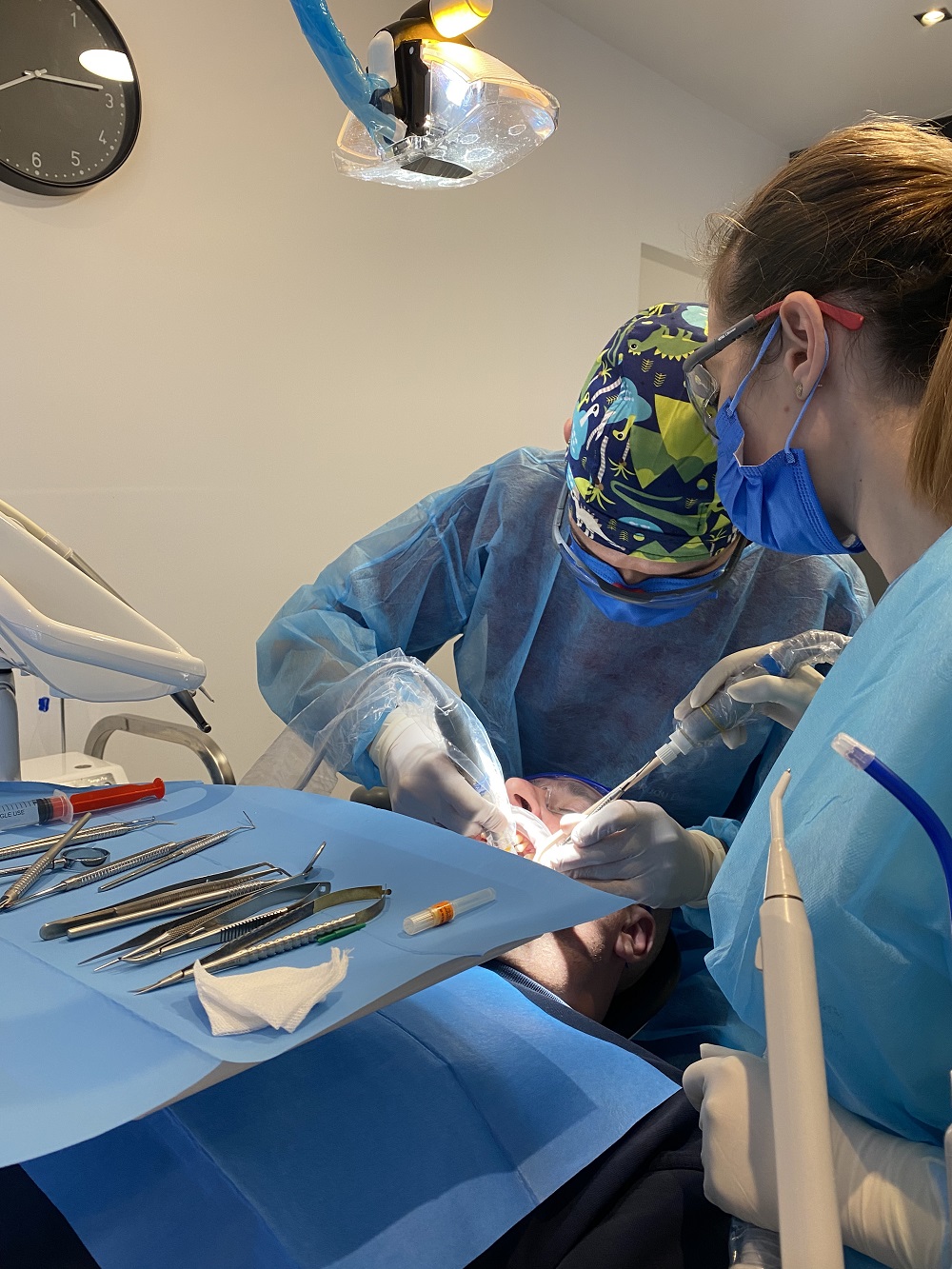
A dental implant allows a missing tooth to be rebuilt starting from a fixed support placed in the bone. Depending on the patient’s case, this can bring several benefits:
However, the specific benefits depend on the initial situation and the type of restoration made, which is why the treatment plan must be drawn up individually.
A dental implant acts as the link between the bone and the restoration that will replace the missing tooth. It is not the visible crown itself, but the support on which the crown can be fixed.
For a single missing tooth, the implant can support an individual crown. For larger gaps, implants can be distributed so that they support a bridge, and in the case of a toothless arch they can form part of a more complex prosthetic rehabilitation plan.
Its role is therefore both surgical, through its integration into the bone, and prosthetic, by providing a point of support for the future restoration.
The cost of dental implant treatment is not made up solely of the price of the implant itself. To estimate your budget correctly, the entire treatment plan must be taken into account, from the initial situation to the final restoration.
The price may vary according to:
If you are from Băicoi, the initial consultation is important precisely so that you receive a plan tailored to your case and understand which procedures make up the total cost of treatment.
For a patient coming from Băicoi, treatment should be seen as a complete journey, not just the day the implant is placed. The consultation, the procedure, the healing period, the check-ups and the making of the final restoration must be coordinated according to how the case progresses.
At the Dr. Radu Dumitru Clinic, treatment starts with an assessment of the individual situation and setting out the stages needed before the procedure. This way, the patient can find out from the start what their case involves, whether preparatory procedures are needed and how treatment will continue after the implant is placed.
For those travelling from Băicoi, it is also important that visits can be planned in line with the necessary medical stages, so that each journey has a clear purpose within the treatment.
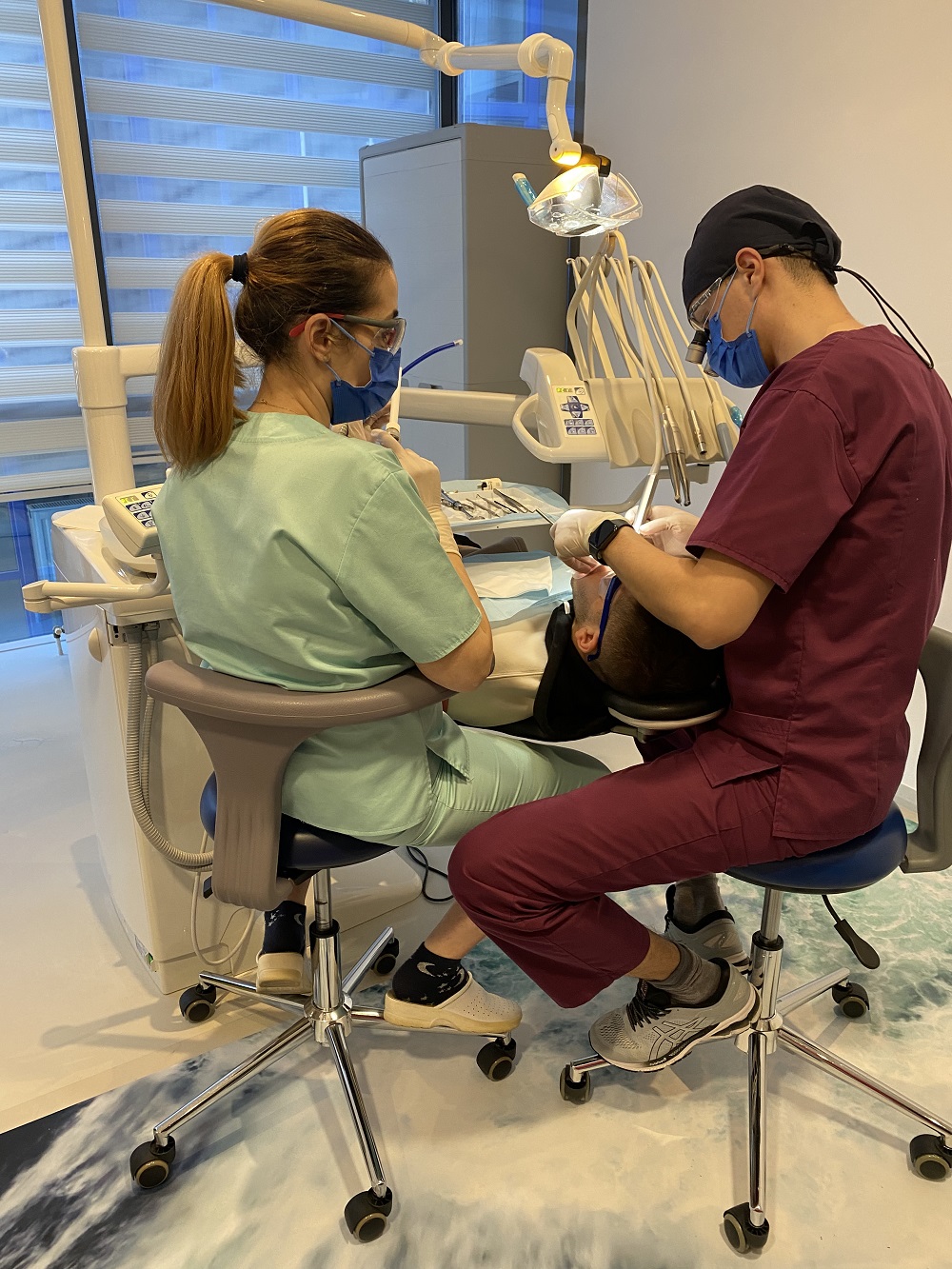
The Dr. Radu Dumitru Clinic can also be an option for patients who live in Băicoi or in other localities in this part of Prahova County and are looking for treatment for one or more missing teeth.
If you live in Scorțeni, Bănești, Cocorăștii Mislii or a locality near Băicoi, you can request a consultation to assess the possibility of dental implant treatment. The first visit allows the dentist to analyse the case and determine the investigations and procedures that may be needed.
Patients from Plopeni, Florești, Ariceștii Rahtivani or Păulești can also contact the clinic to assess a solution for replacing missing teeth. Where treatment involves several visits, the follow-up appointments are scheduled according to the stages of the individual plan.
For patients coming from Câmpina or the Prahova Valley area, the initial assessment is also useful for estimating the number of stages needed. Depending on the complexity of the case, the dentist can determine which procedures are needed and how the visits will be spread out until treatment is complete.
The price of a dental implant varies according to the type of implant, the material used and the complexity of the case (the need for bone grafting, the number of implants, etc.). At the Dr. Radu Dumitru Clinic, patients from Baicoi receive a clear treatment plan from the very first consultation, with all costs detailed before the procedure begins.
Frequently asked questions
There is no fixed number of visits that applies to all patients. Usually, you will need the assessment and treatment planning, the placement of the implant, the recommended check-ups and the prosthetic stages for making the final tooth. If extractions, bone grafting or other procedures are needed, the number of journeys may increase. After the consultation, the dentist can explain more precisely how the visits will be spread out in your case.
In certain cases, some procedures can be carried out during the same visit, but this is not possible or advisable for every patient. The decision depends on the procedures needed, the condition of the tissues, the complexity of the procedure and the plan set by the dentist. If you are coming from Băicoi, you can discuss how the appointments can be organised right from the consultation.
The implant is placed under anaesthesia, so the treated area is numb throughout the procedure. Once the anaesthetic wears off, temporary pain, sensitivity or swelling may occur. Post-operative symptoms vary according to the extent of the procedure and the body’s individual response.
The period between extraction and implant placement varies from case to case. In certain situations the implant can be placed in the same session as the extraction, while in other cases a healing period is needed before the procedure. The condition of the bone, the presence of an infection and the characteristics of the area are some of the factors the dentist assesses before deciding on the right moment.
How long an implant will function cannot be determined in advance for each patient. Implants can remain functional for many years, but the long-term result is influenced by oral hygiene, the health of the gums and bone, smoking, certain general conditions and attending regular check-ups. The prosthetic restoration fitted on the implant may also need maintenance, repair or replacement over time.
In the first few days after the procedure, soft foods that do not require intensive chewing are generally preferable. It is advisable to avoid hard and crunchy foods and chewing directly on the operated area for as long as your dentist advises. The exact dietary recommendations will depend on the type and extent of the procedure carried out.
Some health problems or local situations may temporarily prevent the procedure or may require further assessment. Important factors include uncontrolled general conditions, active infections in the mouth, certain medications and problems that may affect healing. Smoking is also a risk factor. The presence of one of these factors does not automatically mean that an implant is impossible, as whether it is indicated is decided individually by the dentist.
Local anaesthesia, administered in the area where the procedure is carried out, is usually used for placing a dental implant. This temporarily blocks the sensation of pain in the treated region. Depending on the complexity of the procedure, your medical history and your needs, the dentist decides on the appropriate option before the procedure.
Implantology and surgery
Dental implants in Pitesti ▷ Turn to our services with confidence and discover how easy it is to…
Neodent implant. Fast, safe and effective treatments for a flawless smile
Straumann implant. Fast, safe and effective treatments for a flawless smile
All-on-4 or All-on-6! ▷ Turn to our services with confidence and discover how…
Fixed dental prosthesis Pitesti ▷ Turn to our services with confidence and discover how easy it is to…
Find out how the sinus lift procedure helps you get stable implants even with a bone deficit.…
We assess your situation, explain your options and give you a clear treatment plan, with the stages and costs set out from the start.