Prosthodontics
A dental crown is one of the most effective restorative solutions when a tooth is damaged, fractured or weakened. It restores both the function of the tooth and the beauty of your smile. At the Dr. Radu Dumitru dental practice, dental crowns are made with modern, durable materials tailored to each patient’s needs.
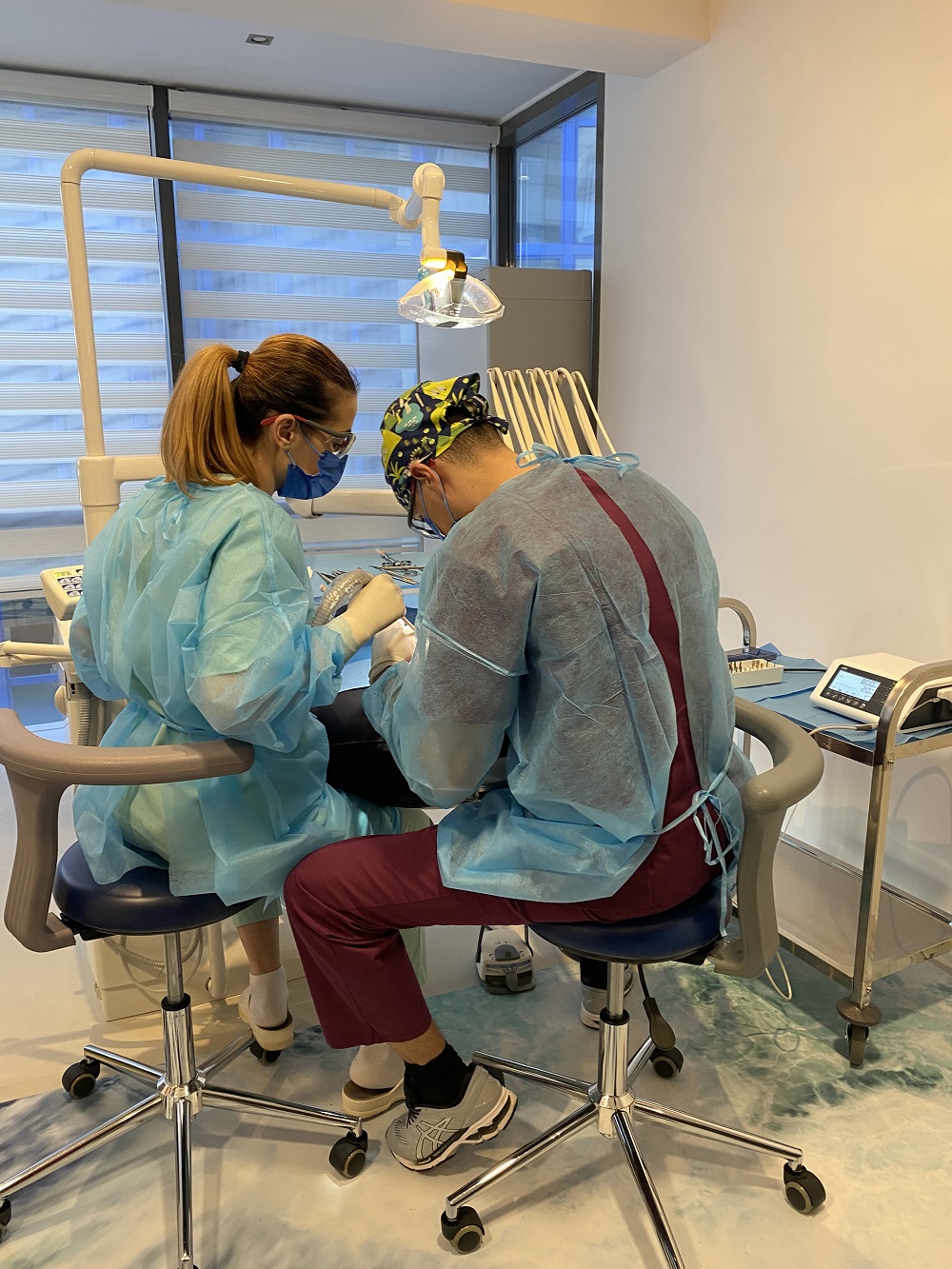
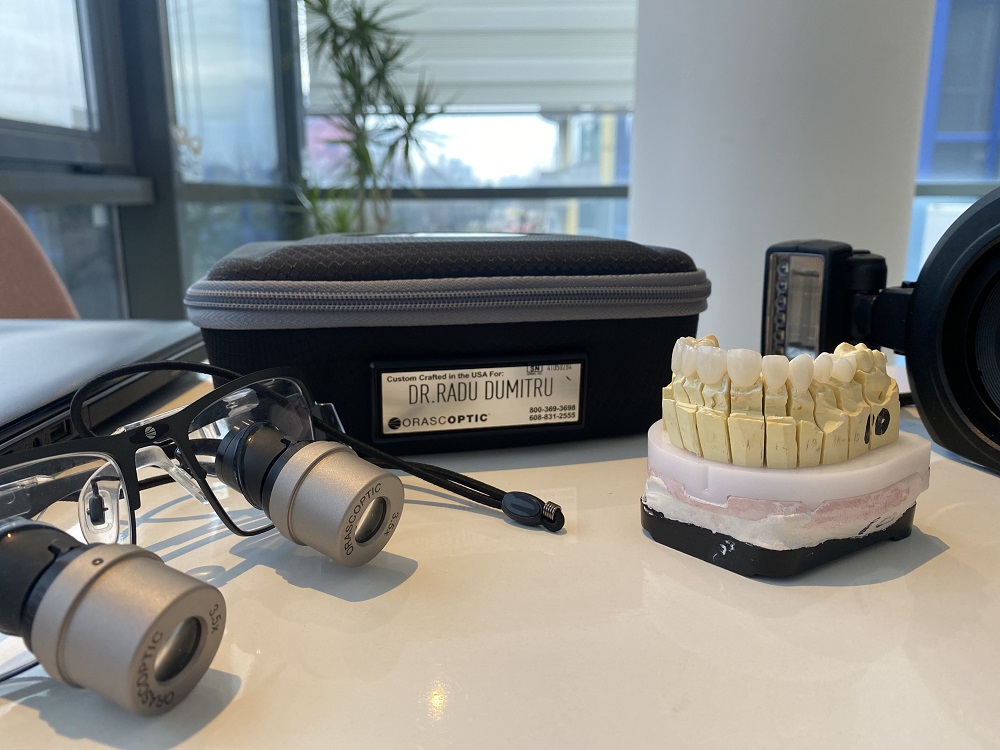
A dental crown is a prosthetic restoration that completely covers a damaged tooth, giving it strength, stability and a natural appearance. In practice, it works like a „jacket” that protects the tooth and blends it harmoniously with the rest of the arches.
A dental crown may be recommended in several situations:

Depending on the material used and the aesthetic or functional needs, there are several types of dental crowns:
Zirconia is one of the most modern and durable materials used in prosthodontics. Zirconia crowns look natural, are very durable and biocompatible, making them ideal both for the front teeth and for the molars. What is more, they do not cause allergies and stand up very well over time.
All-ceramic crowns are preferred for the front teeth because of their excellent aesthetics. They perfectly imitate the translucency of natural enamel and give an outstanding visual result. They are recommended for patients who want a flawless smile, with no aesthetic compromises.
Metal crowns are extremely strong and can be a good choice for molars, where aesthetics are less important. However, for aesthetic reasons, they are used less often today. In many cases, porcelain-fused-to-metal crowns are preferred, combining the strength of metal with the natural look of ceramic.
A well-made dental crown brings multiple benefits:
Although it is an effective solution, a dental crown also has a few limitations:
Although dental crowns are safe and effective treatments, certain risks or complications can arise, especially if oral hygiene or regular check-ups are neglected:
An experienced doctor and high-quality materials considerably minimise these risks, and regular check-ups can prevent them almost entirely.
The durability of a dental crown depends on the material, the technique used to make it and the care it receives afterwards. On average:
To extend the lifespan of a dental crown, it is important to:
Frequently asked questions
No. Dental crowns do not respond to whitening procedures, because they are made of materials such as zirconia, ceramic or porcelain fused to metal. If you want a whiter smile and the crown is a different colour from your natural teeth, the solution is to adapt the treatment: either remake the crown in a lighter shade, or whiten your natural teeth before the restoration is made.
Allergies to dental crowns are rare. However, with metal or porcelain-fused-to-metal crowns, there is a small risk of sensitivity to certain alloys. Modern materials such as zirconia or all-ceramic are biocompatible and safe, and are recommended for patients with sensitivities.
Treatment takes between 2 and 3 visits to the doctor, over one to two weeks. In the first stage, the tooth is prepared and an impression is taken. Until completion, a temporary crown is fitted. At the next visit, the permanent crown is adjusted and cemented.
Modern crowns, especially zirconia or all-ceramic ones, look very natural and perfectly imitate the colour and translucency of natural teeth. No one will notice the difference if the restoration is made properly and in the right shade.
The lifespan of a dental crown depends on the material and the care it receives. On average, a crown can last 10–15 years, and metal ones even longer. Oral hygiene and regular check-ups with your doctor are essential to extend its lifespan.
Yes, a dental crown can be fitted both on a prepared natural tooth and on a dental implant. With implants, the crown completes the treatment, restoring the function and appearance of the missing tooth.
Prosthodontics
Need a denture or want to replace yours❓ We offer you the perfect solution for restoring…
Fixed dental prosthesis Pitesti ▷ Turn to our services with confidence and discover how easy it is to…
We assess your situation, explain your options and give you a clear treatment plan, with the stages and costs set out from the start.