Dental implant · patients from Costesti
What is a dental implant and what is it made of? A dental implant is a solution that allows a lost tooth to be restored, starting from a support placed in the bone. Unlike a restoration that relies solely on the existing teeth, an implant creates its own point of support for the future restoration. A tooth on an implant generally involves several components: the implant itself – the part placed in the bone, usually made of titanium; the abutment – the component that connects the implant to the visible restoration; the dental crown – the part that restores the shape and function of the lost tooth. When several teeth are missing, the principle remains the same, but the number of implants and the type of prosthetic restoration are determined according to the patient’s situation.
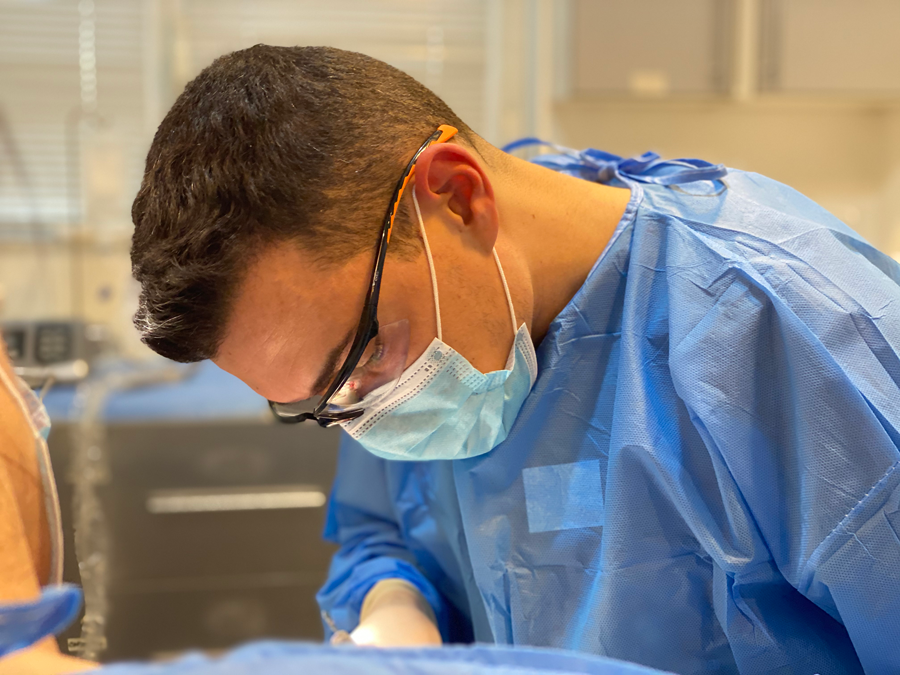
The implant’s role is to create the support needed for the prosthetic restoration. Once placed in the bone and after the healing period, it can support the crown or form part of an implant system that supports a more extensive restoration.
In practice, the implant functionally replaces the support previously provided by the tooth’s root, without being an identical copy of it. The visible part is restored separately, during the prosthetic stage.
An implant can be considered in a number of tooth-loss situations, but the recommendation is made after a clinical and imaging assessment. Having a gap in the dental arch is not enough: the bone, the gums and your general health also need to be analysed.
The treatment may be recommended:
The timing of the procedure and the type of treatment are decided individually, as not every patient can follow exactly the same protocol.
For the patient, treatment begins before the implant itself is placed and ends once the final tooth has been made. If you are coming from Costești to the Dr. Radu Dumitru Clinic in Pitești, your treatment pathway is set after your situation has been assessed.
1. The initial consultation – the dentist examines the area of the missing tooth, the other teeth and the surrounding tissues, and discusses the relevant aspects of your medical history.
2. Investigations and planning – the necessary imaging is analysed to assess the bone and plan the position of the implant.
3. Preparing the area – if the situation requires it, extractions, treatment of existing problems or bone-preparation procedures may be needed before the implant.
4. Placing the implant – the implant is surgically positioned in the bone, according to the agreed plan.
5. Healing and osseointegration – next comes the period during which the implant integrates into the bone. Its length varies from case to case.
6. Making the final crown – once the implant and the tissues allow treatment to continue, the prosthetic stage begins, at the end of which the final tooth is made.
If additional procedures are needed, the total duration and the sequence of stages may change. For this reason, a more precise timeline can only be set after the consultation.
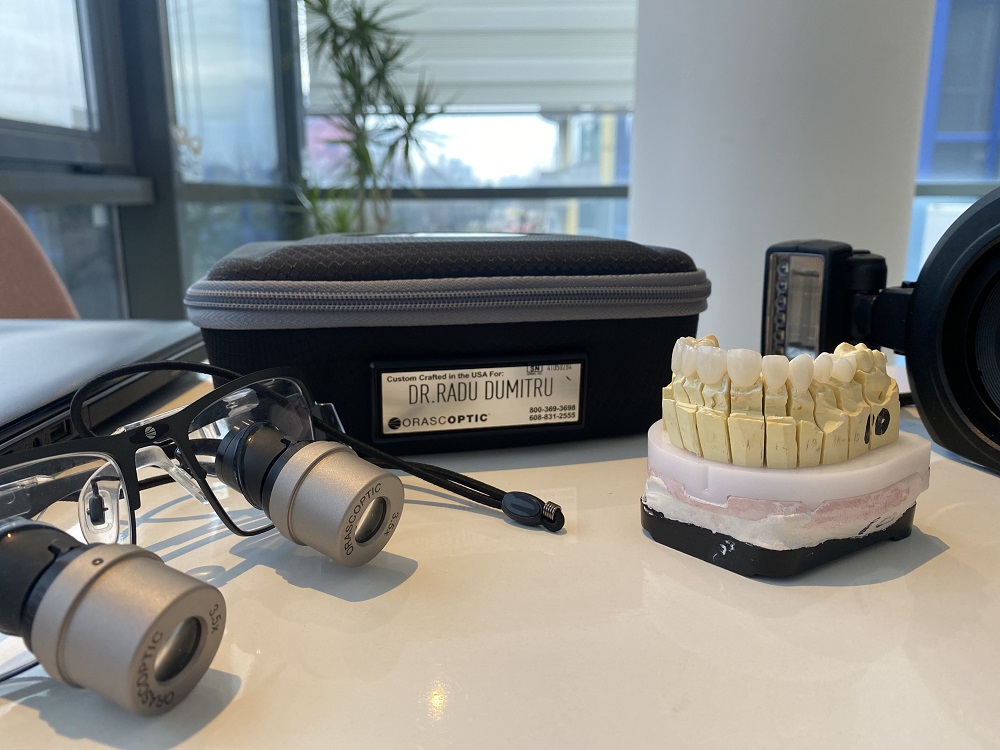
An implant, a dental bridge and a removable denture are different solutions for replacing missing teeth. The choice is not made on preference alone, but according to the number of teeth lost, the condition of those remaining, the bone available and the particular features of each case.
Where an implant is indicated, it can offer a number of advantages:
This does not mean that an implant is automatically superior in every situation. A bridge or a denture may remain suitable solutions for certain patients, and the choice should be made after a medical assessment.
If you live in Costești, treatment involves travelling to Pitești at several points, from the initial assessment to the completion of the restoration. That is why it helps to know and plan the stages right from the start.
At the Dr. Radu Dumitru Clinic, the recommendation starts from an assessment of your individual situation. Before the procedure, we establish whether an implant is indicated, which investigations are needed and whether any procedures must be carried out before placement.
After the consultation, you will have a clearer understanding of your treatment pathway: what is done at each stage, when the healing period is needed and when work on the crown or prosthetic restoration can begin.
The Dr. Radu Dumitru Clinic in Pitești also welcomes patients for assessment from Costești and the localities in this part of Argeș County who are looking for a solution to replace missing teeth.
For patients who need to travel, the initial consultation is also important for setting out the subsequent stages and the visits required.
If you live in Suseni, Rociu or Slobozia, you can request a consultation to find out whether your situation allows implant treatment. The initial assessment shows whether the area can be treated directly or whether other procedures are needed before placement.
For patients from Stolnici, Buzoești and Hârsești, the plan can be arranged so that each visit corresponds to a specific stage of treatment. The intervals between appointments, however, will depend on the procedures carried out and the time needed for healing.
Patients from Mozăceni, Negrași or Izvoru can also book an assessment for a missing tooth or for a situation in which several teeth need replacing. The number of implants and the type of restoration are not determined solely by the number of gaps, but by an analysis of the whole case.
The price of a dental implant varies according to the type of implant, the material used and the complexity of the case (the need for bone grafting, the number of implants, etc.). At the Dr. Radu Dumitru Clinic, patients from Costesti receive a clear treatment plan from the very first consultation, with all costs detailed before the procedure begins.
Frequently asked questions
The total duration varies from patient to patient and includes more than the placement procedure. You need to take into account the initial assessment, any preparatory procedures, the placement of the implant, osseointegration and the making of the prosthetic restoration. If extractions or bone augmentation are needed, treatment may take longer. An estimated timeline can be set after the case has been assessed.
The implant is placed under anaesthesia, so the treated area is numb during the procedure. Once the anaesthetic wears off, there may be discomfort, sensitivity and temporary swelling. Post-operative symptoms and how long they last vary according to the procedure and the patient’s individual response.
In certain cases, the implant can be placed immediately after the tooth is extracted. However, this option is not suitable for every situation. The dentist must assess the remaining bone, the surrounding tissues, the stability that can be achieved and any local problems before deciding when to place the implant.
Insufficient bone volume does not automatically rule out implant treatment. Depending on the deficit and the area being treated, the dentist may consider a bone augmentation procedure or another approach tailored to the case. Whether such a procedure is needed is determined after a clinical and imaging assessment.
An implant can function for a long time, but there is no number of years that can be guaranteed to every patient. Oral hygiene, the health of the surrounding tissues, smoking, certain general conditions and regular check-ups all influence the long-term result. The crown or prosthetic restoration is a separate component and may need maintenance or replacement over time.
Contraindications must be assessed individually. Certain uncontrolled general conditions, active oral infections, some medications or other situations that may affect healing may require treatment to be postponed or modified. Smoking is also a risk factor. Some of these situations are temporary and do not permanently rule out an implant.
The implant and the prosthetic restoration must be included in your daily oral hygiene routine. Careful brushing and cleaning the areas where bacterial plaque can build up are important for the health of the gums and of the tissues around the implant.
On top of this come the regular check-ups and professional cleanings recommended by your dentist. The fact that an implant cannot develop decay does not mean that the tissues supporting it cannot be affected by inflammation.
Implant placement is usually carried out under local anaesthesia. This numbs the treated area and prevents you from feeling pain during the procedure. The anaesthetic approach is decided by the dentist according to the procedure being performed and the patient’s medical particulars.
On top of this come the regular check-ups and professional cleanings recommended by your dentist. The fact that an implant cannot develop decay does not mean that the tissues supporting it cannot be affected by inflammation.
Implantology and surgery
Dental implants in Pitesti ▷ Turn to our services with confidence and discover how easy it is to…
Neodent implant. Fast, safe and effective treatments for a flawless smile
Straumann implant. Fast, safe and effective treatments for a flawless smile
All-on-4 or All-on-6! ▷ Turn to our services with confidence and discover how…
Fixed dental prosthesis Pitesti ▷ Turn to our services with confidence and discover how easy it is to…
Find out how the sinus lift procedure helps you get stable implants even with a bone deficit.…
We assess your situation, explain your options and give you a clear treatment plan, with the stages and costs set out from the start.